Chloorkop, Kempton Park · Gauteng Mon–Thu 05:30–15:30 · Fri 05:30–12:00
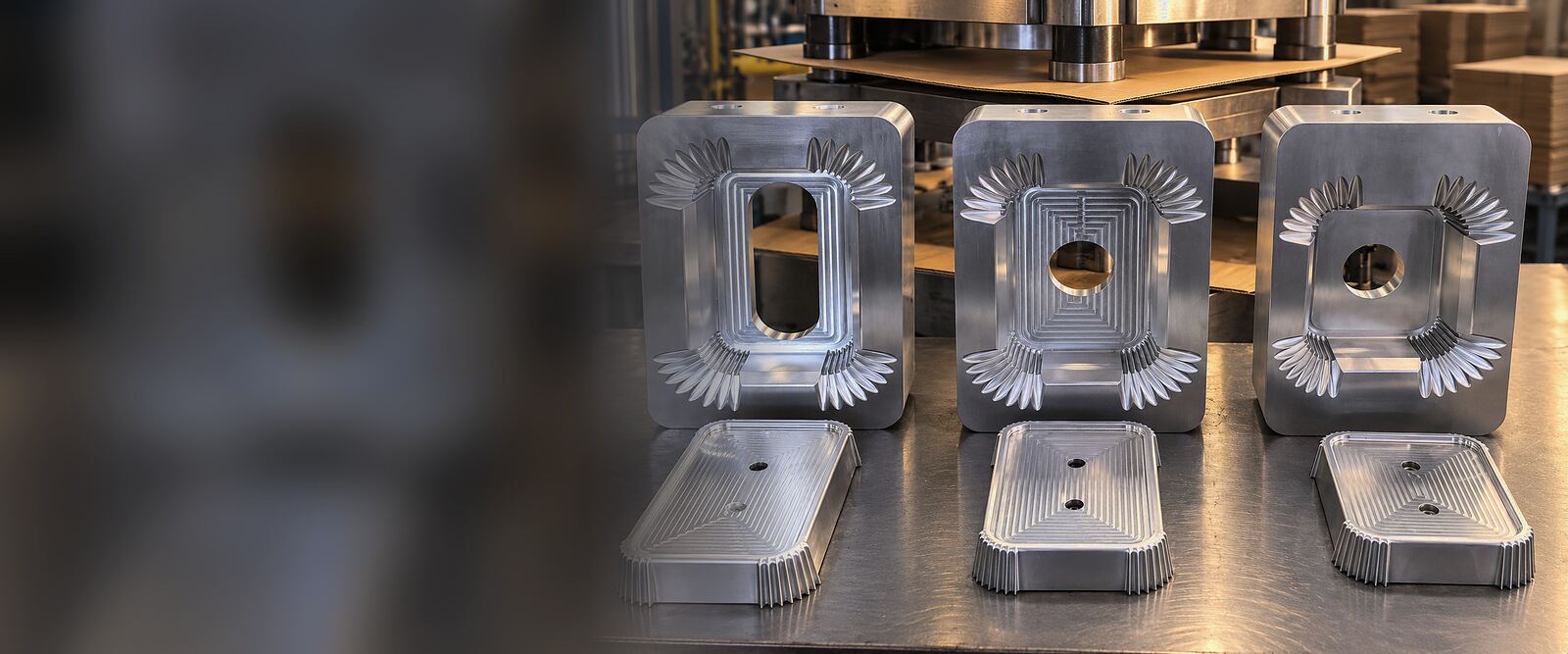
Three machined press tool dies with formed trays below, in front of a press

Toolmaking & Moulds

Toolmakers in Gauteng — Tool and Die Making in Kempton Park

Complete toolmaking from your first concept and 3D CAD design through to manufacture and sample production — dies, mandrels, blades and precision tool parts.

Toolmaking since
1980
Years in the toolroom
46+
Typical tool tolerance
±0.005 mm
Quote response target
24 h

Overview

Toolmaking at Mignon Tools & Dies

Mignon Tools & Dies is a toolmaker in Chloorkop, Kempton Park, that has been building tooling in Gauteng since 1980. We take a tool from the client's first concept through 3D CAD design, manufacture and sample production, and make die bushes and mandrels, cutting blades, cutting rings, split flanges and other precision CNC-machined tool components in one toolroom.

Our work

Press tools and cutting tools

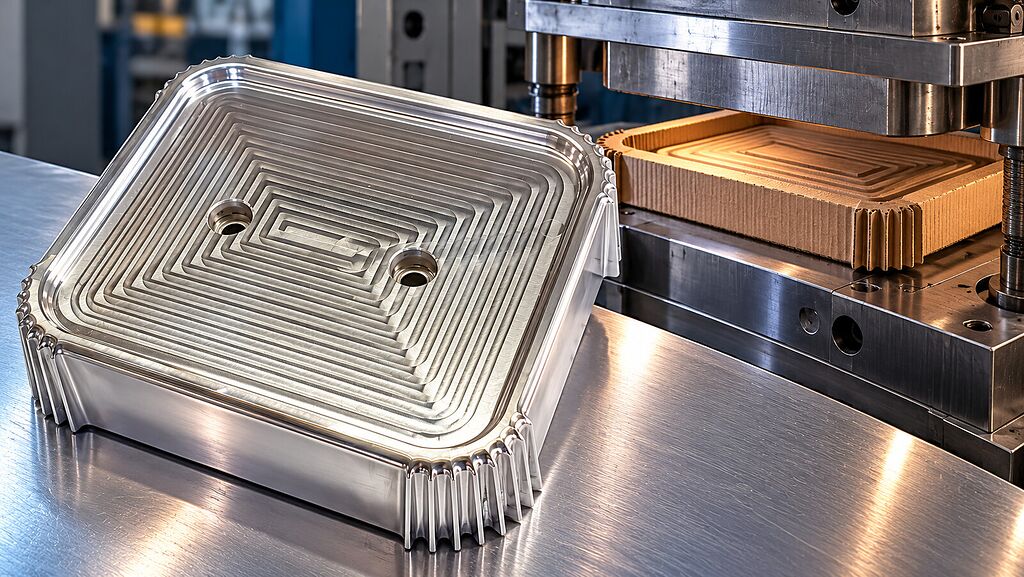
Machined press tool die beside a formed tray in the press
Press tool built to customer drawings
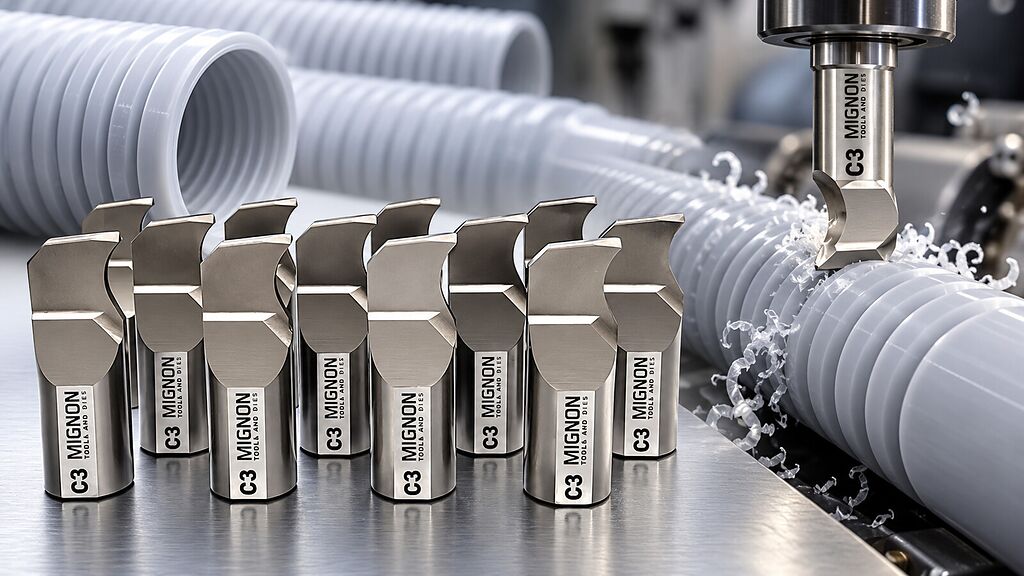
Row of laser-marked cutting tools beside a corrugated pipe line
Cutting tools

Capabilities

What we can do for you

Every job is handled by experienced toolmakers, using the same equipment and standards we apply to our own moulds and dies.

Extrusion dies & mandrels

Die heads, die bushes and mandrels turned, ground and polished for concentric flow and even wall thickness.

Cutting blades & rings

Blades, cutting rings and shear rings in hardened tool steel, ground to a consistent edge.

Concept to 3D CAD

Your idea, sketch or sample developed into a full 3D CAD model you approve before steel is cut.

Jigs, fixtures & gauges

Workholding fixtures, assembly jigs, split flanges and go/no-go gauges for your production line.

Tool repair & refurbishment

Worn or damaged tools rebuilt by micro welding, regrinding and re-polishing — often faster than buying new.

Samples & spare parts

Sample runs to prove the tool, plus replacement blades and wear parts made from the same CAD data.

Specifications

Capability & materials

Send us your drawing even if your part sits outside these figures — we’ll tell you honestly what is achievable.

Toolmaking capability
ScopeConcept / 3D CAD design / manufacture / sample production
Tool typesExtrusion dies and mandrels; cutting blades and rings; flanges; fixtures and gauges
Press tools and progression diesYes, but strictly to drawings supplied by the customer
CAD / CAM softwareSolidWorks, Edgecam and AutoCAD
Heat treatmentHardening / tempering / nitriding through specialist partners
InspectionHeight gauges, granite surface plate, micrometers, vernier and digital calipers, bore gauges, dial indicators, slip gauges, and thread and pin gauges

Cold-work tool steels

  • D2 / 1.2379
  • D3 / 1.2080
  • O1 / 1.2510
  • M2 high-speed steel

Hot-work & mould steels

  • H13 / 1.2344
  • P20 / 1.2311
  • 2316 stainless mould steel
  • S136 / 1.2083

Engineering steels

  • EN8 / 080M40
  • EN19 / 709M40
  • EN24 / 817M40
  • EN36 case-hardening

Stainless & non-ferrous

  • 304
  • 316
  • 431
  • Beryllium copper
  • Phosphor bronze
  • Aluminium 7075-T6

How it works

From enquiry to finished part

A clear, engineering-led process so you always know where your job stands.

  1. Concept & brief

    We establish what the tool must produce, the machine it runs on, volumes and the material being formed or cut.

  2. 3D CAD design

    The tool is modelled in 3D with fits, steel and heat treatment specified, and you approve it before manufacture.

  3. Manufacture

    Components are CNC milled and turned, heat treated, then ground, spark eroded and polished to size.

  4. Fitting & samples

    The tool is assembled and proven with sample production, then adjusted until parts meet specification.

  5. Handover & support

    The tool is delivered, with its CAD data kept on file for spares, regrinds and modifications.

Complete toolmaking, from first concept to sample production

Mignon Tools & Dies has been a working toolroom in Kempton Park since 1980, founded by toolmakers Werner Peiger and Heinz Wostmann. We offer a complete toolmaking service: from the client's first concept, through 3D CAD design, to manufacture and sample production.

CNC milling and turning, grinding, spark eroding, micro welding and laser engraving are all done in-house, so tools never wait on outside suppliers.

Tooling we make

  • Extrusion die bushes and mandrels — the flow components that shape plastic pipe, tube and profile.
  • Cutting blades — straight and shaped blades for packaging, food-processing and converting machines.
  • Cutting rings and shear rings — hardened, ground rings that trim or part material cleanly.
  • Split flanges and clamping rings — machined as matched halves that locate and seal correctly.
  • Jigs, fixtures and gauges — workholding, assembly and inspection tooling.
  • Press tools and progression dies — built strictly to drawings supplied by the customer.

We also produce high-quality CNC-machined parts to drawing where toolroom accuracy matters.

Extrusion dies and mandrels

In extrusion tooling, small errors become visible defects. If the die bush and mandrel are not concentric, the pipe has a thick side and a thin side. Rough flow surfaces leave die lines, and worn lands let dimensions drift. We turn, grind and polish die bushes and mandrels for even melt flow, with bores, spigots and locating faces held concentric.

We usually recommend H13 (1.2344) for its hot hardness and resistance to heat checking; for corrosive polymers such as PVC, a stainless tool steel may suit better.

Cutting blades and cutting rings

Blade life depends on steel, heat treatment and edge geometry. We make blades and rings from wear-resistant steels such as D2 (1.2379), hardened and finish-ground to a consistent edge angle. Matched sets are ground together so the clearance is right when they are fitted. Each blade can be laser engraved with a part or set number to make reordering simple — see laser engraving and part marking.

Choosing tool steel and heat treatment

More tools fail early because of the wrong steel or heat treatment than because of poor machining. As a general guide:

  • D2 / 1.2379 — cutting edges, punches and wear parts needing abrasion resistance.
  • H13 / 1.2344 — hot-work dies, extrusion tooling and parts that cycle in temperature.
  • P20 / 1.2311 — pre-hardened mould plates and holders, avoiding heat-treatment distortion.
  • 2316 / S136 stainless — mould components exposed to moisture or corrosive materials.
  • EN19 and EN24 — tough steels for fixtures, flanges and structural tool parts.

We rough-machine before heat treatment and finish-grind or spark erode after hardening, so critical dimensions are held.

Tool maintenance, repairs and spares

We regrind worn blades and rings, re-polish die surfaces, and rebuild chipped edges with micro welding, then re-machine the repair to the original geometry. CAD models of the tools we build stay on file, so a replacement mandrel or blade set does not need reverse engineering again. If a tool failure stops your line, call or WhatsApp 060 788 1285 — breakdown work is assessed the same day.

Why manufacturers choose Mignon as their toolmaker

  • Over 46 years of toolmaking since 1980.
  • Concept to sample in one toolroom, with every process in-house.
  • Practical advice on steel, tolerances and design before manufacture.
  • Support after delivery — regrinds, repairs and spares.
  • Easy to reach in Chloorkop, Kempton Park, serving Johannesburg, Pretoria and all of South Africa.

Related services: injection moulds, CNC milling, spark eroding and precision grinding.

FAQ

Toolmaking questions, answered

Can’t find what you’re looking for? Call or WhatsApp us — you’ll speak directly to a toolmaker.

What does a toolmaker do?

A toolmaker designs and builds the dies, moulds, blades, jigs and fixtures that production machines use to form, cut or hold parts, combining CAD design, precision machining, heat treatment, grinding and fitting.

Can you design a tool from my idea or a sample?

Yes. We take tools from first concept through 3D CAD design, manufacture and sample production. A sketch, drawing, 3D model or physical sample is enough to start.

Do you build press tools and progression dies?

Yes, but strictly to drawings supplied by the customer. Send us your press tool drawings and we will confirm what we can build.

Which steels do you use for tooling?

D2 for wear-resistant cutting edges, H13 for hot-work tooling such as extrusion dies, P20 and 2316 stainless for mould components, and EN-series steels for fixtures. We recommend steel and heat treatment per tool.

Can you repair or regrind existing tools?

Yes. We regrind blades and rings, re-polish die flow surfaces, rebuild damaged edges with micro welding and remake worn components.

Do you make spare parts for tools another toolmaker built?

Yes. Without drawings, we measure the worn part, model it in 3D CAD and manufacture a replacement, keeping the model on file.

Where are you based and how do I get a quote?

Chloorkop, Kempton Park, near OR Tambo. Send a drawing, model or photo, or call or WhatsApp 060 788 1285 (Mon–Thu 05:30–15:30, Fri 05:30–12:00).

Free, no-obligation quote

Get a quote for toolmaking

Tell us what you need. Attach a drawing, 3D model or photo if you have one — it helps us quote accurately.

Add specification (optional — helps us quote faster)
Approximate size (mm)
Drawings, models or photos
    We reply within one working day.

    Related services

    Often combined with

    WhatsApp us