
Injection moulds built and maintained by toolmakers
Mignon Tools & Dies has made tooling in Kempton Park since 1980. Injection moulds are one of our specialities: we build and maintain high-precision moulds designed for accuracy, durability and efficient production. Because design, machining, spark eroding, grinding, polishing and welding repair are all in-house, the same toolmakers who build a mould can maintain it for its working life.
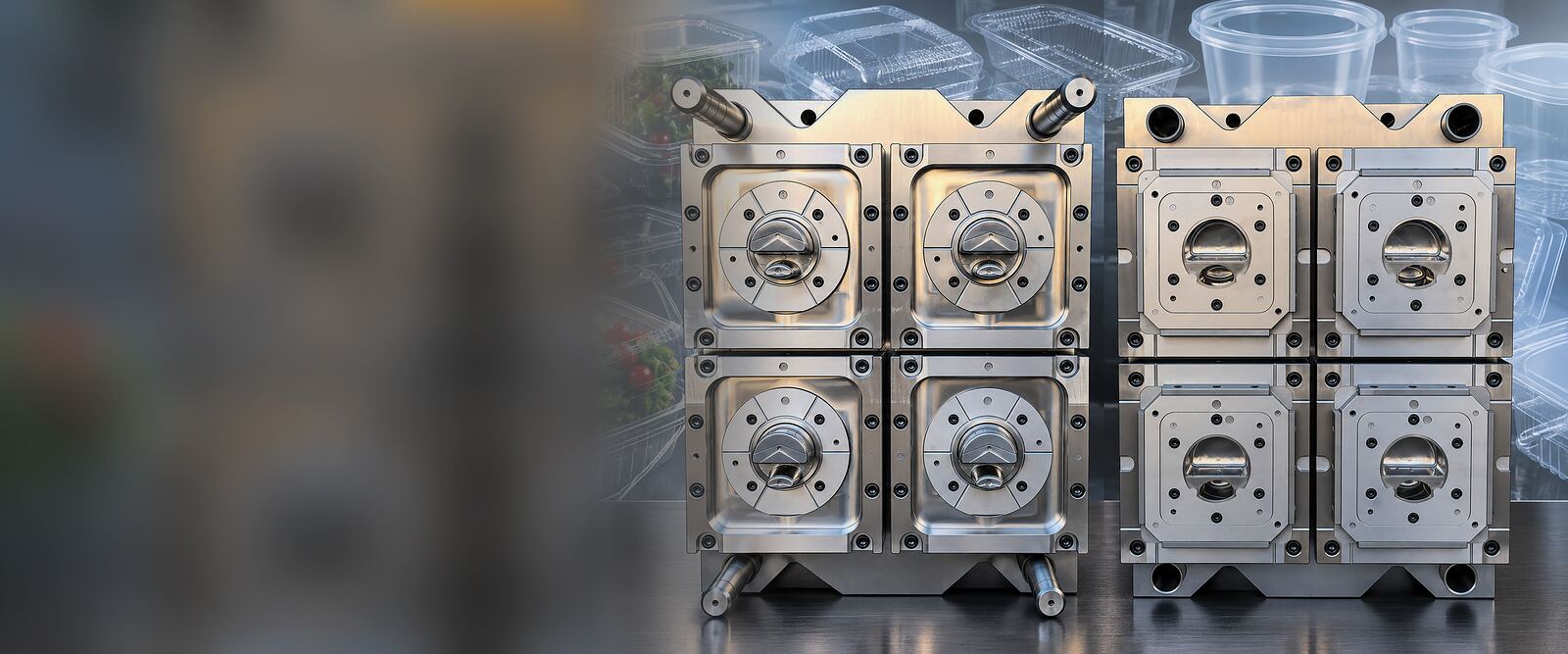
Thin-wall and food packaging moulds
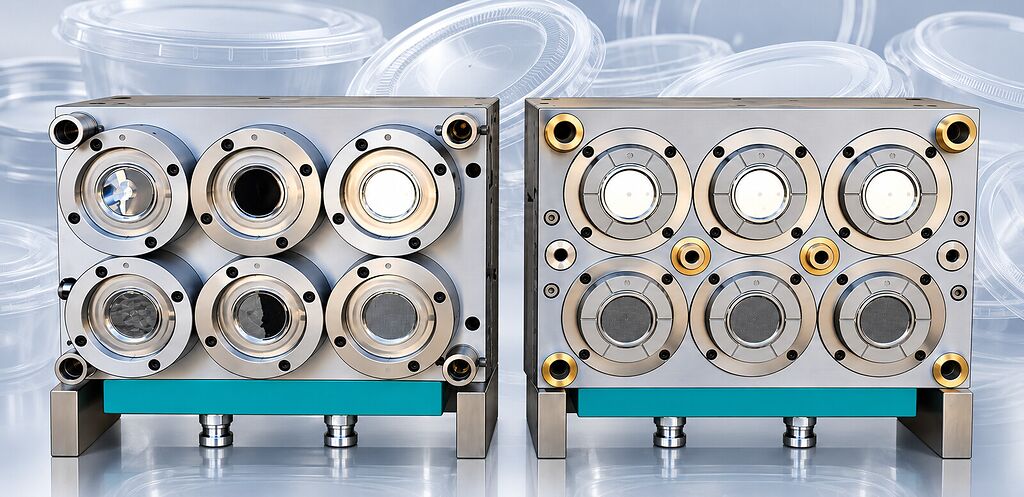
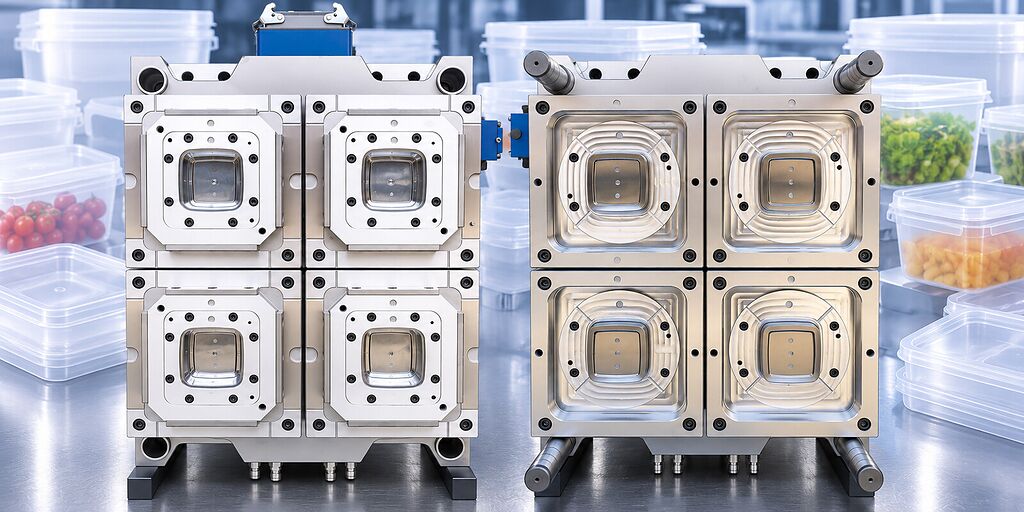
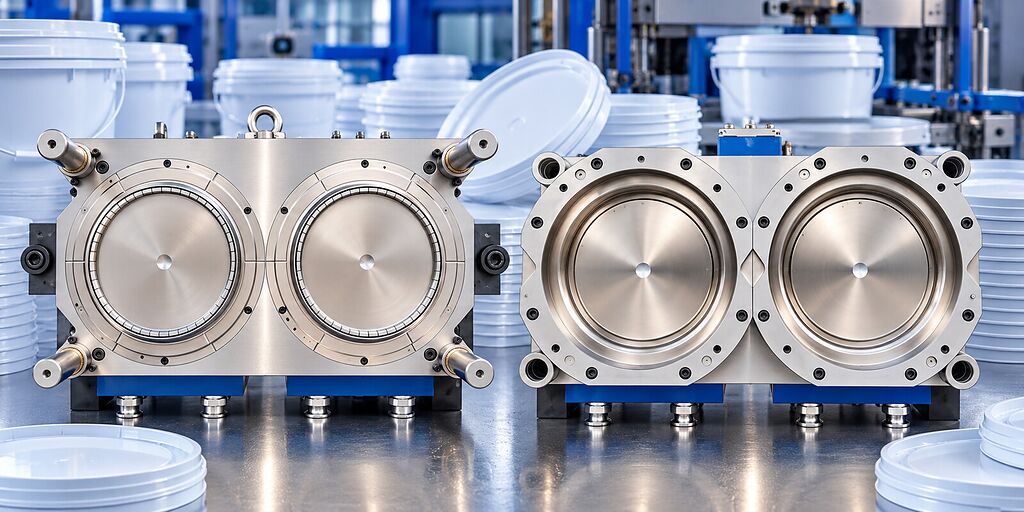
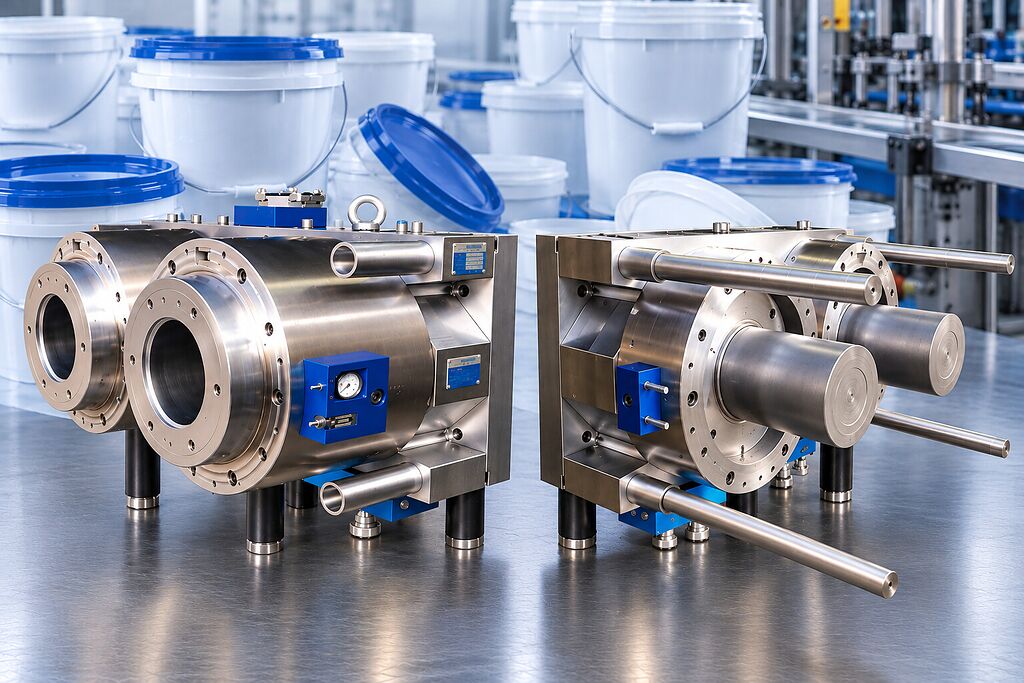
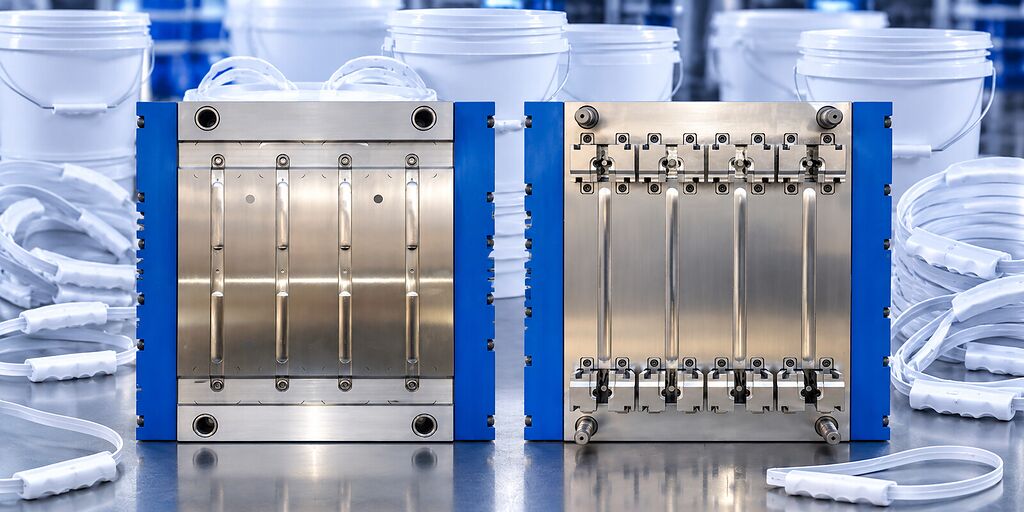
Much of our mould work is for the packaging and food industries: moulds for ice cream, butter and yoghurt tubs and lids, food containers and paint packaging. Thin-wall moulds are demanding. The plastic must fill a long, thin cavity in a fraction of a second, so the tool needs:
- Balanced filling, so every cavity in a multi-cavity mould fills at the same time and parts weigh the same.
- Even wall thickness, with core and cavity aligned by taper or side locks so walls do not shift under injection pressure.
- Close, effective cooling, often with beryllium copper inserts in core tips where steel cannot remove heat fast enough.
- Good venting, because trapped air in a thin wall causes short shots and burn marks.
- Stiff plates and supports, so the mould does not deflect and flash at high injection pressures.
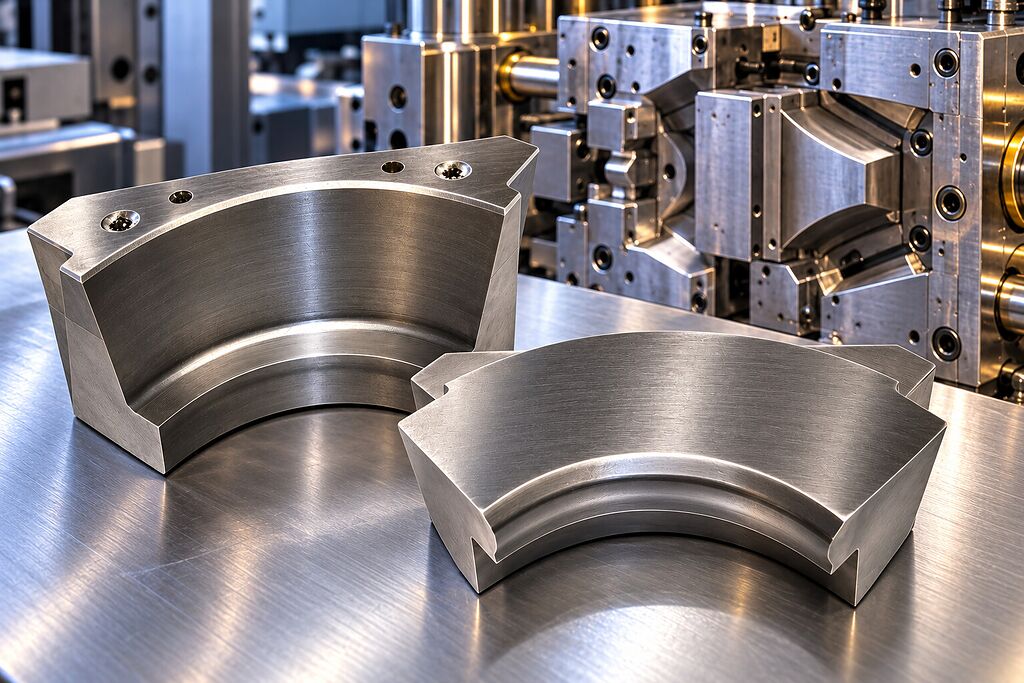
A typical tub mould has a polished cavity insert and a flanged core, and the wall thickness of every part depends on how well the two are aligned. We machine and grind the core flange, spigot and locating tapers together, so a replacement core or cavity fits the existing mould without rework.
Mould design that suits your press
A mould has to match the part and the machine. Before cutting steel we check wall thickness, draft angles, gate position, ejection and shrinkage for the chosen plastic, usually polypropylene or polyethylene for packaging. We confirm shot weight, clamp force, tie-bar spacing and ejector layout against your press. Small changes at the design stage, such as an extra half-degree of draft or a radius on a sharp corner, often improve cycle time and reduce rejects more than anything done later.
Steel selection and finish
- 2312 / 1.2312 — pre-hardened, machinable steel for plates and general cavities.
- 2316 and 2083 stainless — corrosion-resistant, polishable steels for food packaging and humid conditions.
- 2344 / 1.2344 — through-hardened steel for high-wear cores, gates and shut-offs.
- Beryllium copper — for inserts that need fast heat removal.
Cavities are polished to suit the product, from a mirror finish for transparent or high-gloss parts to a finer matt surface that hides flow marks and helps release.
Mould maintenance and repairs
Moulds wear in predictable ways: parting lines get dented by trapped parts, shut-offs wear and flash, vents clog, cooling channels scale up, and ejector pins gall or break. A planned maintenance routine catches these before they stop production. Our service includes:
- Stripping, cleaning and inspecting the mould and its wear components
- Repairing damaged edges, parting lines and shut-offs with micro welding, then re-machining and re-polishing
- Replacing worn ejector pins, sleeves, guide pillars and bushes
- Descaling and pressure-testing cooling circuits
- Remaking worn cores, cavities and inserts from drawings or the original part
For urgent repairs, call or WhatsApp 060 788 1285. We assess breakdown work the same day.
Why choose Mignon for injection moulds
- Over 46 years of tool and die experience in Chloorkop, Kempton Park.
- Specialists in thin-wall packaging moulds for the food and consumer industries.
- Build and maintenance under one roof — the same team that builds the mould repairs it.
- Related expertise in blow mould repair, toolmaking and CAD design.