
Chloorkop, Kempton Park · Gauteng Mon–Thu 05:30–15:30 · Fri 05:30–12:00
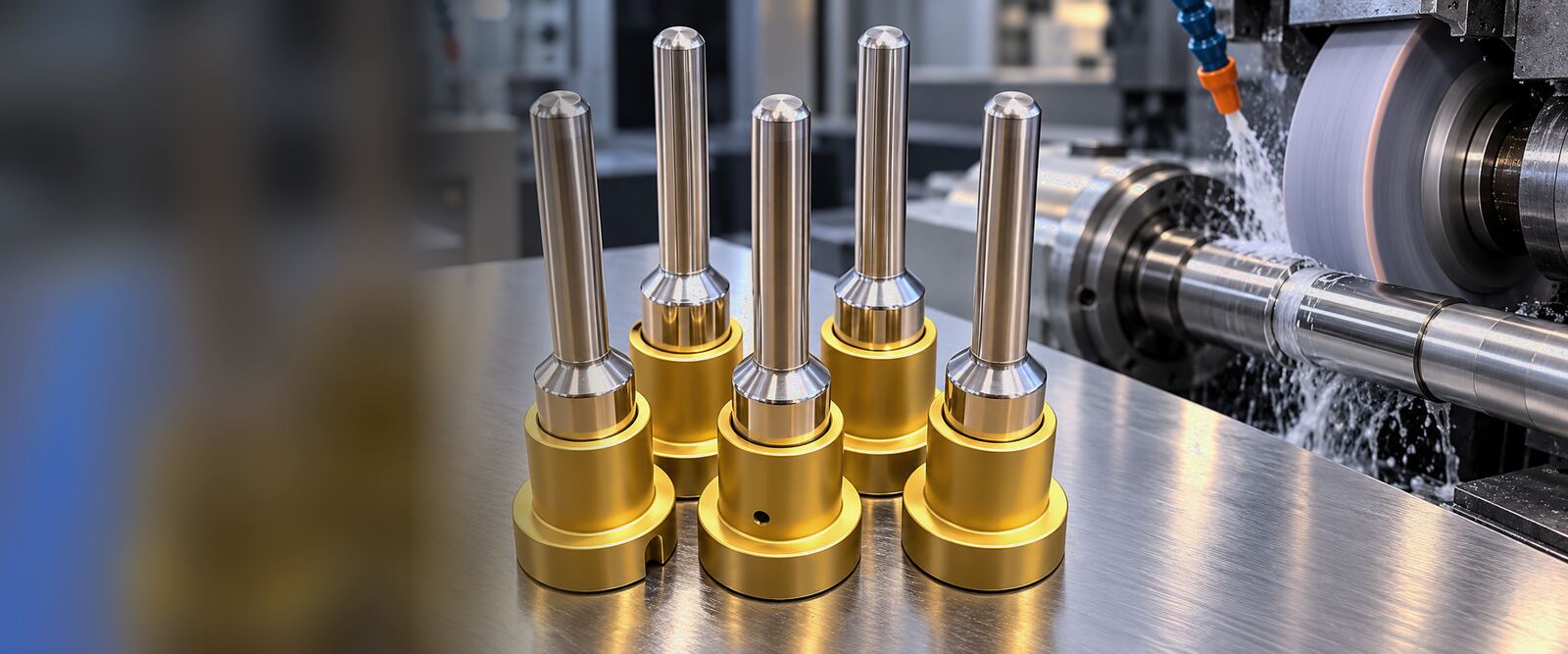
Ground blow pins with gold-coloured bases beside a cylindrical grinder at work

Precision Machining

Surface & Universal Grinding Services in Gauteng

Flat, square and cylindrical surfaces ground to fine tolerances and smooth finishes — including hardened parts after heat treatment.

Toolmaking since
1980
Surface grinder table
1000 × 600 mm
Ground tolerance
±0.01 mm
Quote response target
24 h

Overview

Surface & Universal Grinding at Mignon Tools & Dies

Mignon Tools & Dies offers both surface grinding and universal (cylindrical) grinding at its toolroom in Chloorkop, Kempton Park, near Johannesburg. We grind mould plates, die blocks, shafts, pins and bushes to tight tolerances and fine surface finishes, in soft or hardened steel, as a one-off service or as the final operation on parts we machine.

Our work

Ground parts

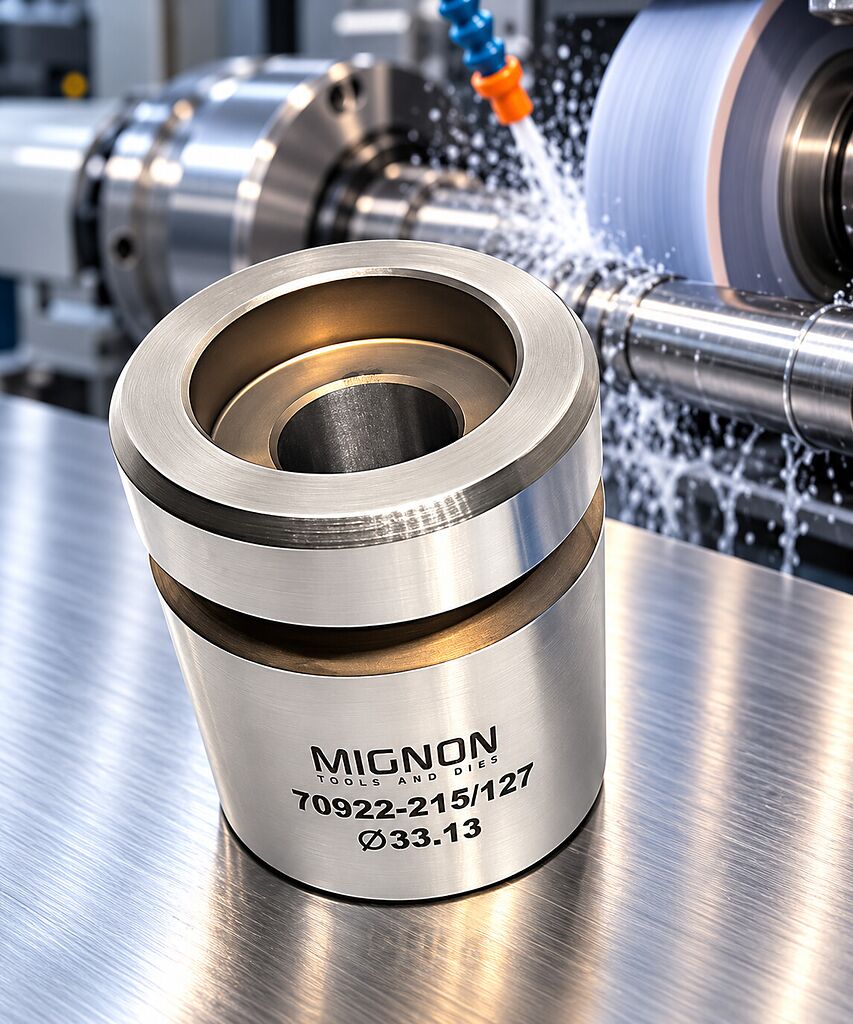
Ground steel ring laser-marked with part number and diameter
Ground ring, marked with its size
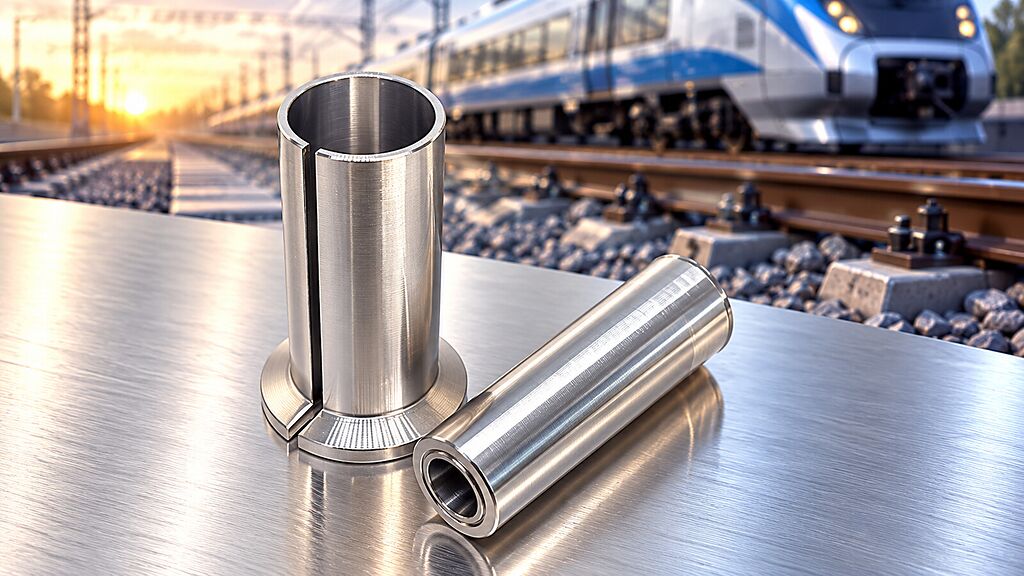
Ground stainless steel sleeves on a steel bench
Ground sleeves

Capabilities

What we can do for you

Every job is handled by experienced toolmakers, using the same equipment and standards we apply to our own moulds and dies.

Surface grinding

Mould plates, die blocks, wear plates and inserts ground flat, parallel and square on a magnetic chuck.

Cylindrical (OD) grinding

Shafts, pins, spindles and rollers ground between centres to precise diameters and roundness.

Internal & taper grinding

Bores, tapers and shoulders ground on the universal grinder, down to a 6 mm bore.

Hardened steel

Final sizing of D2, H13, EN24 and case-hardened parts after heat treatment, removing hardening distortion.

Fine surface finishes

Smooth ground finishes for sealing, sliding and bearing surfaces where a turned or milled finish is not good enough.

Regrinding & repair

Worn shafts, die faces, cutting rings and wear plates reground to restore flatness, size and edge.

Specifications

Capability & materials

Send us your drawing even if your part sits outside these figures — we’ll tell you honestly what is achievable.

Grinding capability
Surface grinderPerfect
Surface grinder table1000 × 600 mm
Universal grinderTOS
Max. outside diameterØ300 mm
Internal grindingYes, min. bore Ø6 mm
Ground tolerance±0.005 mm
Surface finishRa 0.2–0.4 µm

Tool & die steels

  • D2 / 1.2379
  • H13 / 1.2344
  • O1 / 1.2510
  • P20 / 1.2311
  • Silver steel

Engineering steels

  • EN8 induction-hardened
  • EN19 / 709M40
  • EN24 / 817M40
  • EN36 case-hardened

Stainless steels

  • 304
  • 316
  • 420
  • 431
  • 17-4PH

Non-ferrous

  • Brass
  • Phosphor bronze
  • Beryllium copper

How it works

From enquiry to finished part

A clear, engineering-led process so you always know where your job stands.

  1. Enquiry & drawing review

    Send the drawing or the part. We check the ground features, tolerances, hardness and how the part can be held.

  2. Set-up & datum

    We establish the datums that matter — usually a reference face or the centres — so ground features relate correctly.

  3. Rough & finish grinding

    Stock is removed in light passes to avoid heat build-up, then a finish pass achieves size and surface finish.

  4. Measurement

    Diameters, thickness, flatness and parallelism are measured and recorded.

  5. Dispatch

    Parts are cleaned, protected against corrosion and collected or delivered.

Grinding: the final step for size and finish

Grinding is where precision parts get their final size. A milling cutter or lathe tool can hold close tolerances, but once a part is hardened, or a fit must be tighter and smoother than a cutting tool can produce, grinding is the answer. Mignon Tools & Dies has made moulds, dies and precision components in Chloorkop, Kempton Park since 1980, and surface and universal grinding are a core part of that work.

We grind parts we machine ourselves and parts brought in by customers, with the aim of a fine surface finish and tight tolerances on every ground feature.

Surface grinding

Surface grinding produces flat, parallel and square faces. The part is held on a magnetic chuck and passed under an abrasive wheel, removing material in very light cuts. It is the standard finishing process for:

  • Mould and die plates — so cavities close evenly without flash.
  • Inserts, punches and die blocks — ground to thickness and squared on their locating faces.
  • Wear plates and liners — restored to flat after service.
  • Gauges and setting blocks — where flatness and parallelism are the whole point.

Our surface grinding capacity is a 1000 × 600 mm table, which covers most mould plates and die sets used in local plastics and packaging plants.

Universal (cylindrical) grinding

A universal grinder finishes round parts. Working between centres or in a chuck, it grinds outside diameters, shoulders and tapers, and with an internal attachment it can also grind bores. Typical work includes shafts and bearing seats, guide and ejector pins, bushes, spindles and rollers. Because the part rotates on a fixed axis, universal grinding also improves roundness and concentricity between diameters. For round parts that need turning first, see our CNC turning service.

Grinding hardened steel

Heat treatment always moves a part. Thin sections bow, bores close up and long shafts bend slightly. That is why the correct sequence for a precision hardened part is: machine with a grinding allowance, harden and temper, then grind the critical features to size. Grinding removes the distortion and the hardened skin's scale, leaving a true, smooth surface.

Light passes and good coolant are essential. Grinding too aggressively overheats the surface and can soften or crack hardened steel, so we take the time to grind correctly rather than quickly.

Regrinding and repair

Many worn parts do not need replacing. Die faces, wear plates and mould plates can be surface ground back to flat. Worn shafts can be ground to a clean undersize and paired with a new bush. Cutting rings and punches can be reground to restore a sharp edge. Where an edge is chipped too deeply to grind out, micro welding can build it up before regrinding.

Why choose Mignon for grinding

  • Surface and universal grinding in one workshop — flat and round work handled together.
  • Toolmaker experience — more than 46 years grinding mould and die components.
  • Combined with machining and spark eroding — parts can be milled, turned, spark eroded and ground without changing suppliers.
  • Breakdown response — urgent regrinding assessed the same day.
  • Close to Johannesburg — Chloorkop, Kempton Park, near OR Tambo with easy access from Johannesburg, Pretoria and the East Rand.

FAQ

Surface & Universal Grinding questions, answered

Can’t find what you’re looking for? Call or WhatsApp us — you’ll speak directly to a toolmaker.

What is the difference between surface grinding and universal grinding?

Surface grinding produces flat, parallel and square faces, with the part held on a magnetic chuck. Universal grinding is a form of cylindrical grinding that finishes outside diameters, bores, tapers and shoulders on round parts held between centres or in a chuck.

When does a part need grinding rather than machining?

Grind when you need a tighter tolerance or finer finish than milling or turning gives, when the part is hardened, or when two faces must be very flat and parallel. Bearing seats, sliding fits and mould plates are typical examples.

How large a part can you surface grind?

Our surface grinding table capacity is 1000 × 600 mm. Send the drawing if your part is close to this size.

Can you grind hardened steel?

Yes. Grinding is the standard way to finish hardened tool steels and case-hardened parts, because it removes the distortion caused by heat treatment and brings critical features back to size.

How much grinding allowance should I leave?

As a general guide, leave a few tenths of a millimetre per face or on diameter — more on long or heavily hardened parts that distort. Our usual recommendation is e.g. 0.2–0.3 mm; ask us before machining.

Do you grind customer-supplied parts?

Yes. We grind parts machined elsewhere as well as our own. Bring the part with a drawing or a marked-up sketch showing the faces and sizes required.

Where are you located?

Our workshop is in Chloorkop, Kempton Park (Ekurhuleni), near OR Tambo and an easy drive from Johannesburg and Pretoria. Call or WhatsApp 060 788 1285.

Free, no-obligation quote

Get a quote for surface & universal grinding

Tell us what you need. Attach a drawing, 3D model or photo if you have one — it helps us quote accurately.

Add specification (optional — helps us quote faster)
Approximate size (mm)
Drawings, models or photos
    We reply within one working day.

    Related services

    Often combined with

    WhatsApp us