
Blow mould repair that keeps the line running
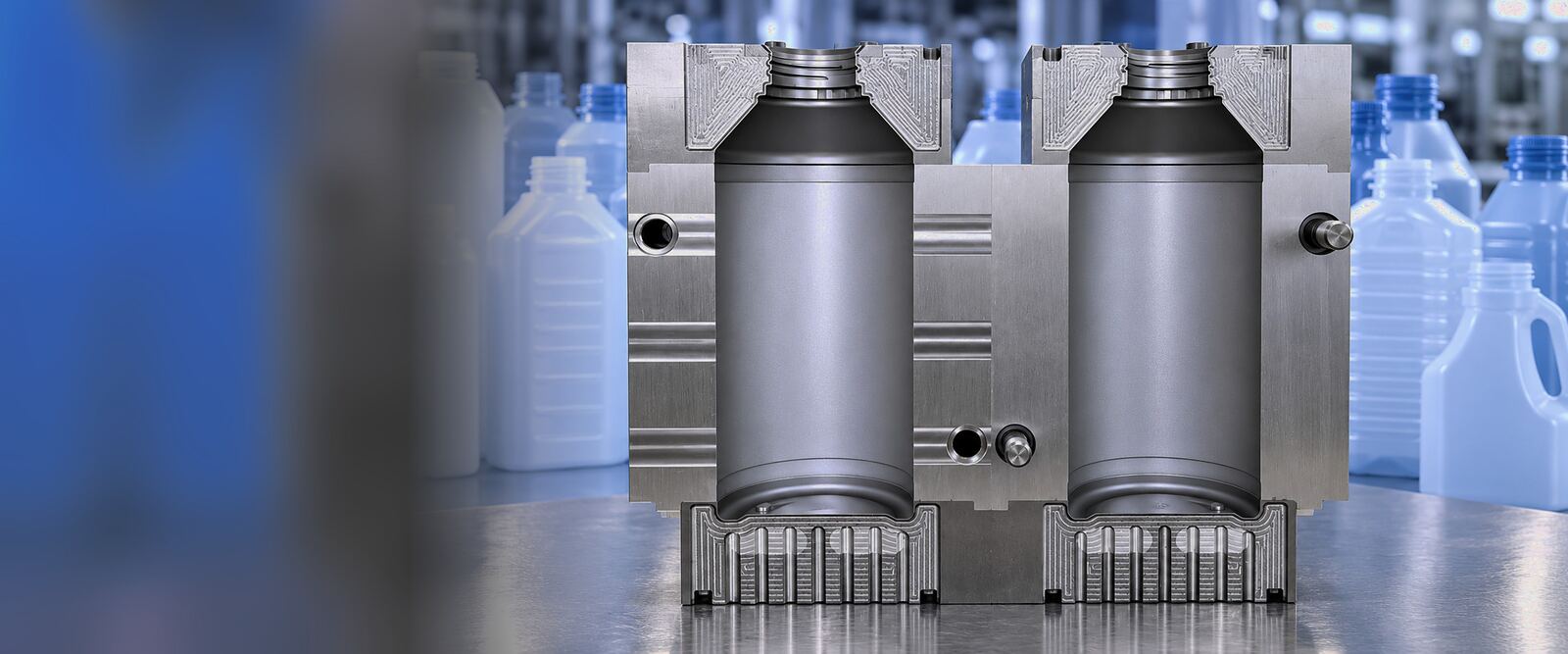
A blow mould wears from the moment it goes into production. Neck inserts and pinch-offs take the most punishment, parting lines get dented during mould changes, and cooling channels scale up. Mignon Tools & Dies repairs, refurbishes and maintains all types of blow moulds so they produce good bottles for longer. The result is better mould performance, a longer service life, less downtime and more consistent production quality.
We have built and repaired tooling in Kempton Park since 1980, including blow moulds for large and small transparent bottles. Micro welding, CNC milling and turning, spark eroding, grinding, polishing and laser engraving are all done in-house, so repaired moulds go back to the line quickly.
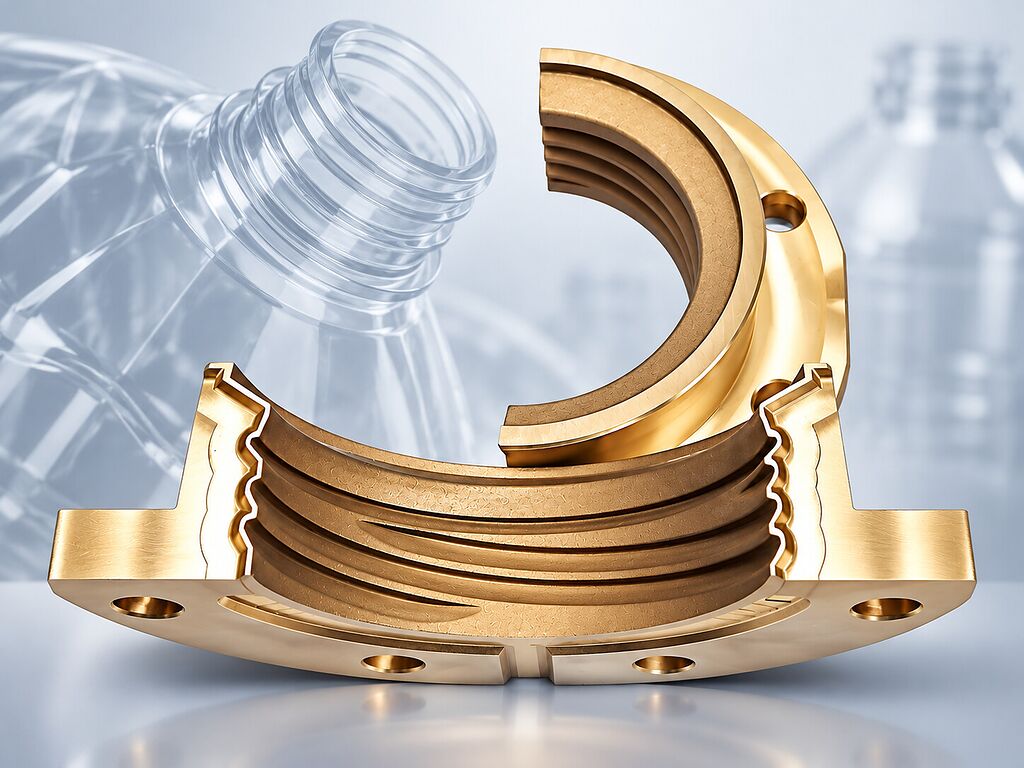
Neck rings and finish inserts
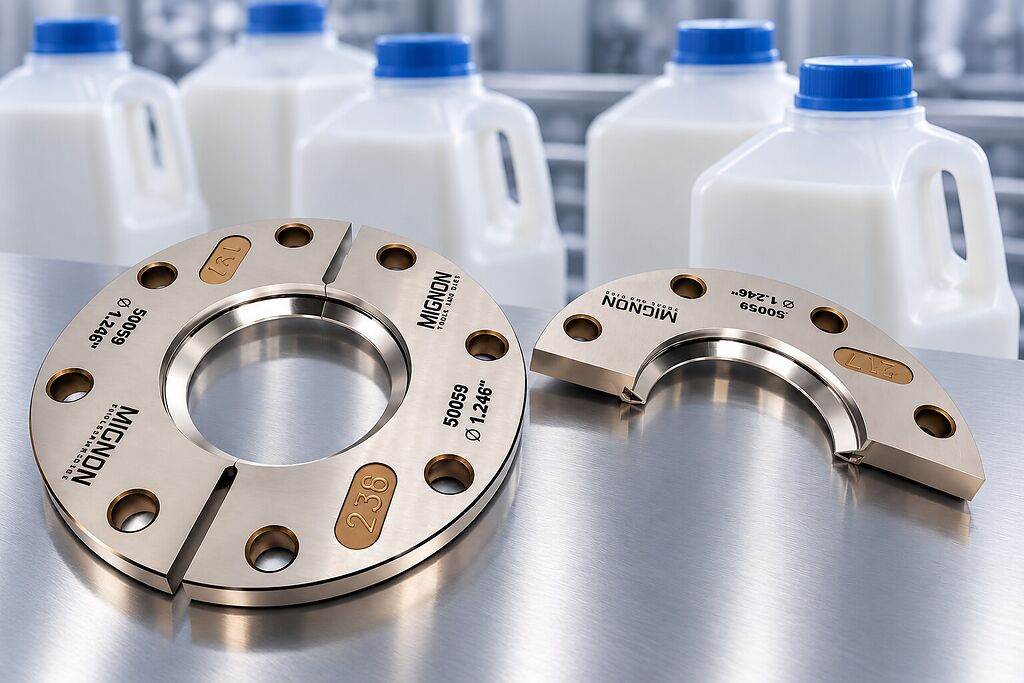
The neck insert forms the bottle finish: the thread, sealing surface and support ring that the closure seals against. Small wear here leads directly to leaking caps, so neck inserts need careful attention. They are usually made of beryllium copper, because it removes heat fast and cools the thick neck section without slowing the cycle.
We repair chipped or dented neck insert halves by micro welding and re-machining. When the thread profile or sealing face is too worn to repair, we make new BeCu insert halves with the thread cut to your finish drawing. Matched halves are machined as a pair so the thread lines up across the parting line.
Blow pins and calibration
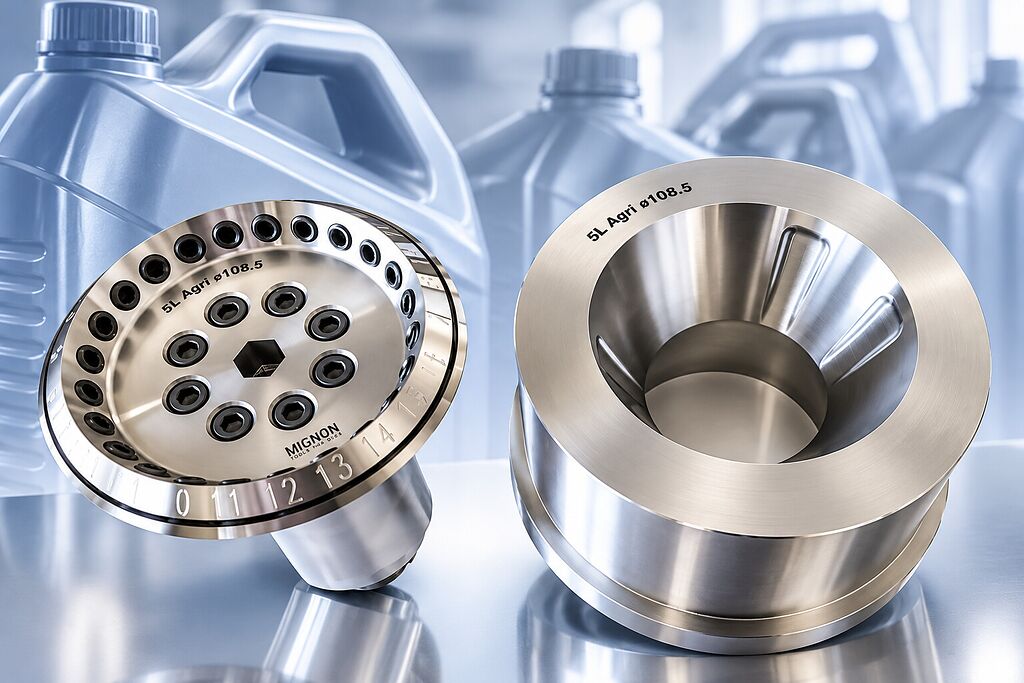
In extrusion blow moulding, the blow pin enters the parison, blows the bottle and calibrates the neck bore. The stem diameter controls the inside diameter of the neck, and the shear or cutting edge trims the neck flash. A worn pin gives an oversize or out-of-round bore and a ragged neck.
We make blow pins with hardened, polished steel stems ground to the required diameter. Each pin is engraved with MIGNON, its part number and its size (for example Ø33.13), and supplied in a branded box. Your maintenance team can identify the right pin quickly and re-order by number. See laser engraving and part marking.
Pinch-offs, flash and parting-line damage
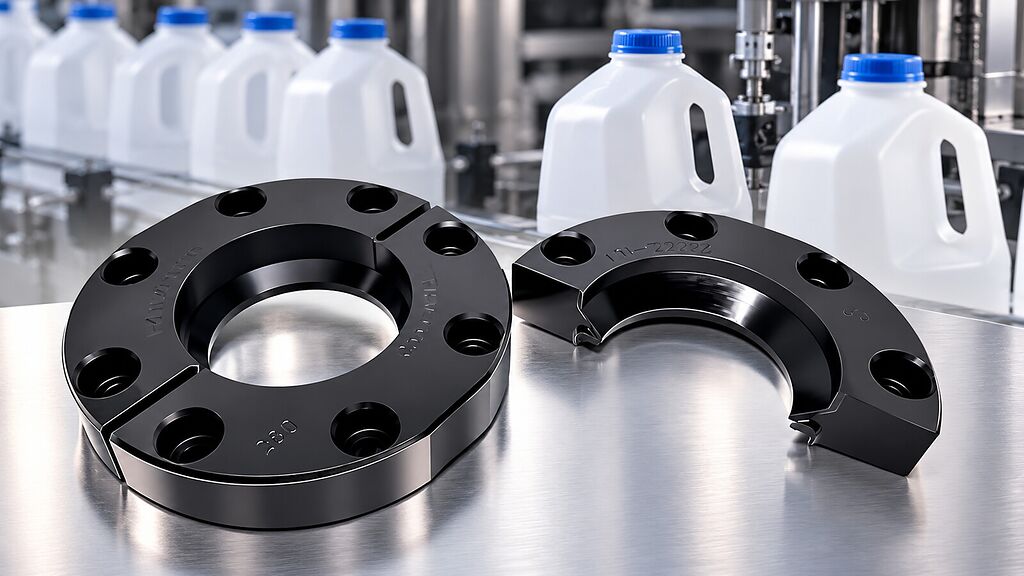
The pinch-off closes the parison at the bottle base or handle, welds it and cuts the tail. Its land width and relief angle decide how strong the base weld is and how cleanly the flash comes off. When a pinch-off gets rounded, chipped or dented, it causes weak or thin bases, pin holes on the weld line, heavy tail flash and difficult trimming.
We rebuild worn pinch-offs by micro welding with a filler that matches the insert material. Then we re-machine the land and relief to the original geometry, or to an improved one if the original was causing trouble. We repair dented parting lines and damaged cavity edges the same way, then check that the halves close evenly with no light gaps.
Venting, cooling and surface finish
- Venting. Air trapped between the parison and cavity wall causes poor surface detail and thin spots. Opaque bottle cavities are often grit-blasted so air can escape along the surface, and slot or plug vents are added where needed. We clean blocked vents and restore the blast finish.
- Cooling. Scale and corrosion in cooling channels slow heat removal, which lengthens the cycle and causes warped or uneven bottles. We clean and pressure-test cooling circuits and replace damaged plugs and fittings.
- Polishing. Moulds for clear, transparent bottles need a high polish, because every scratch shows on the product. We re-polish cavities after repairs and remove handling marks.
Micro welding repairs on beryllium copper and aluminium
Most blow moulds are made of aluminium with BeCu or steel inserts. Both non-ferrous metals conduct heat very well, so conventional TIG welding spreads heat into the surrounding area. That can soften aluminium, distort a cavity or crack a thin edge. Micro welding puts small, controlled welds exactly where material is missing, with low heat input and minimal distortion. The repair is then re-machined and blended into the original surface. We use micro TIG welding for fine work and conventional TIG welding for larger build-ups.
Beryllium copper dust and fumes are hazardous, so we grind, weld and polish BeCu components with appropriate extraction and handling.
Preventive maintenance and spares
Planned maintenance costs less than breakdowns. We recommend:
- Each production run: wipe the parting lines, check the vents and inspect the pinch-offs for damage.
- At each mould change: inspect the neck inserts and blow pins, and check guide pins and bushes for wear.
- Periodically: strip the mould fully, clean and pressure-test the cooling, re-polish or re-blast the cavities, and measure critical dimensions.
- Keep critical spares on the shelf, such as neck insert halves, blow pins and pinch-off inserts, so a damaged part does not stop production.
We keep records of the moulds we service, so spares can be remade to the same dimensions. To arrange a repair or a maintenance schedule, call or WhatsApp 060 788 1285. Breakdown work is assessed the same day.