What spark eroding does
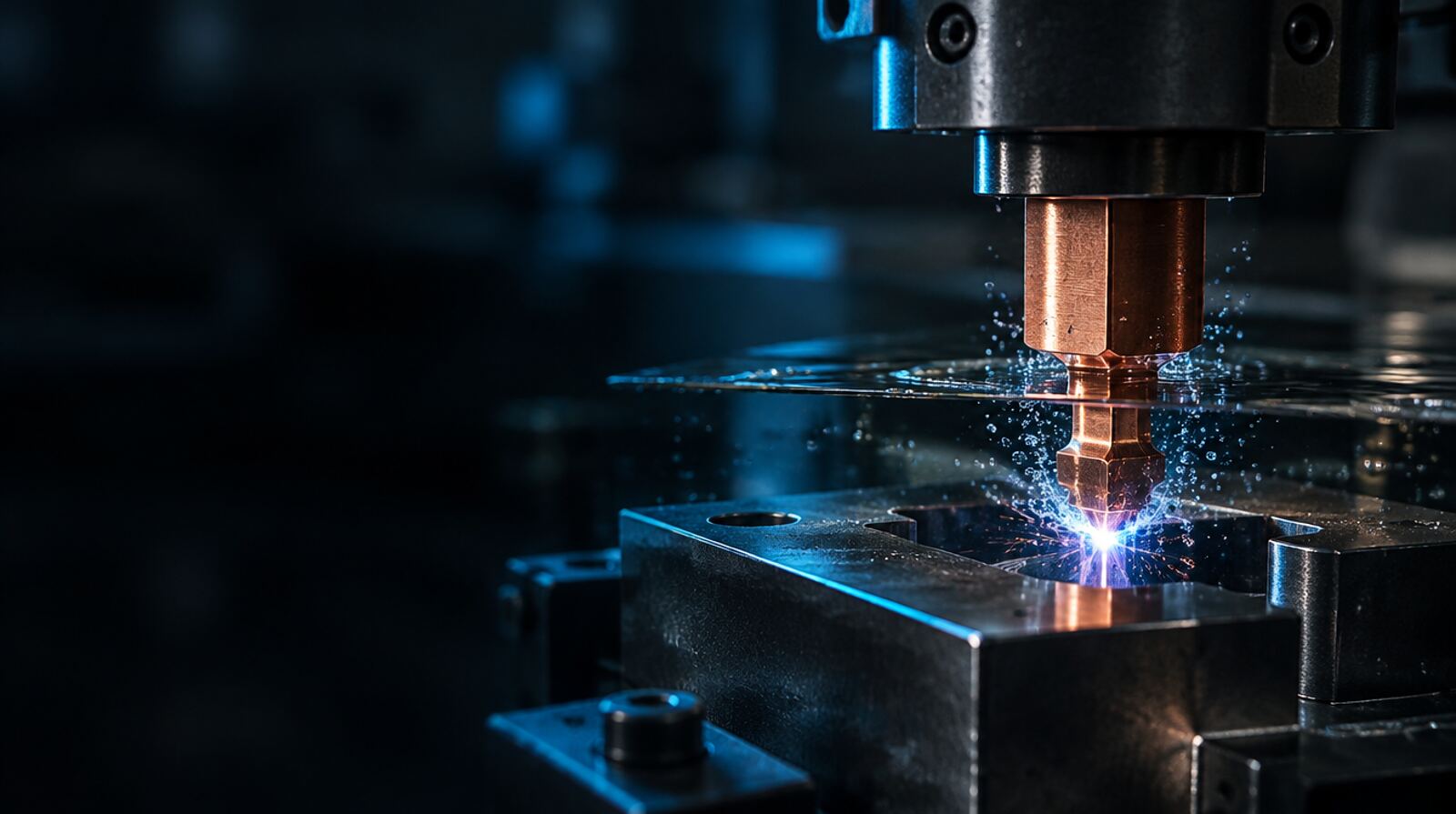
Spark eroding, known internationally as EDM (electrical discharge machining), shapes metal with thousands of controlled electrical sparks. An electrode is brought close to the workpiece in a bath of dielectric fluid, and each spark melts and vaporises a tiny amount of material. Because the electrode never touches the part, there is no cutting force, and the hardness of the steel makes little difference.
Mignon Tools & Dies has been making moulds and dies in Chloorkop, Kempton Park since 1980, and spark eroding is a core part of that toolroom work. We use it on our own injection moulds and dies, and as a service for engineers and toolrooms who need complex shapes, detailed cavities or work in hard-to-machine materials.
When to choose spark eroding over milling
CNC milling is faster for most open shapes in soft material. Spark eroding is the better choice when:
- The steel is already hardened — eroding avoids annealing, machining and re-hardening.
- You need sharp internal corners — a round cutter always leaves a radius; an electrode does not.
- Ribs and slots are deep and narrow — long, thin cutters deflect and break; eroding does not load the tool.
- Features are blind or hard to reach — pockets and cavities where a cutter cannot reach the bottom or the corners.
- Details are very small — fine text, logos and date stamps in mould cavities.
Sinker EDM with copper and graphite electrodes
Our spark eroding work is die-sinking (sinker) EDM. The electrode is a positive of the shape to be eroded, made slightly undersize to allow for the spark gap. We design electrodes in CAD and mill them in-house, choosing the material to suit the job:
- Copper gives fine surface finishes and sharp detail, and suits smaller, detailed electrodes.
- Graphite is light, machines quickly, wears slowly in roughing and suits larger electrodes.
Complex cavities usually use a roughing electrode to remove most of the material and one or more finishing electrodes to reach size and the specified finish. This approach gives repeatable results, so multi-cavity tools produce matching cavities.
Wire EDM
We do not offer wire EDM. Wire EDM cuts through-profiles such as punch and die openings with a thin, continuously fed wire. If your part needs wire cutting, contact us and we will advise on the best route.
Spark eroding for moulds and dies
Most of our eroding goes into tooling: rib slots, bosses and ejector blade slots in injection moulds, detail in blow moulds, and sharp-cornered openings in press tools. Eroding also helps with modifications and repairs, letting us add or deepen a feature in a hardened insert without taking the tool apart for re-hardening. After eroding, inserts can be surface ground to final thickness in the same workshop.
Finishes, tolerances and turnaround
Spark eroding produces a fine, even matt finish that is often acceptable without polishing, and can be specified on drawings as an Ra or VDI value. A finer finish means slower final passes, so we recommend specifying only what the function requires. Because electrodes are designed and milled in-house, we control the whole job and keep turnaround fast.
Why choose Mignon for spark eroding
- Toolmaker experience — more than 46 years of eroding mould and die details.
- In-house electrodes — copper and graphite electrodes designed and milled under our own roof.
- Hardened work without re-treatment — modify or add features to hardened tooling.
- Complete toolroom — milling, turning, grinding, micro welding and eroding in one place.
- Central location — Chloorkop, Kempton Park, near OR Tambo, serving Johannesburg, Pretoria and the rest of Gauteng.