
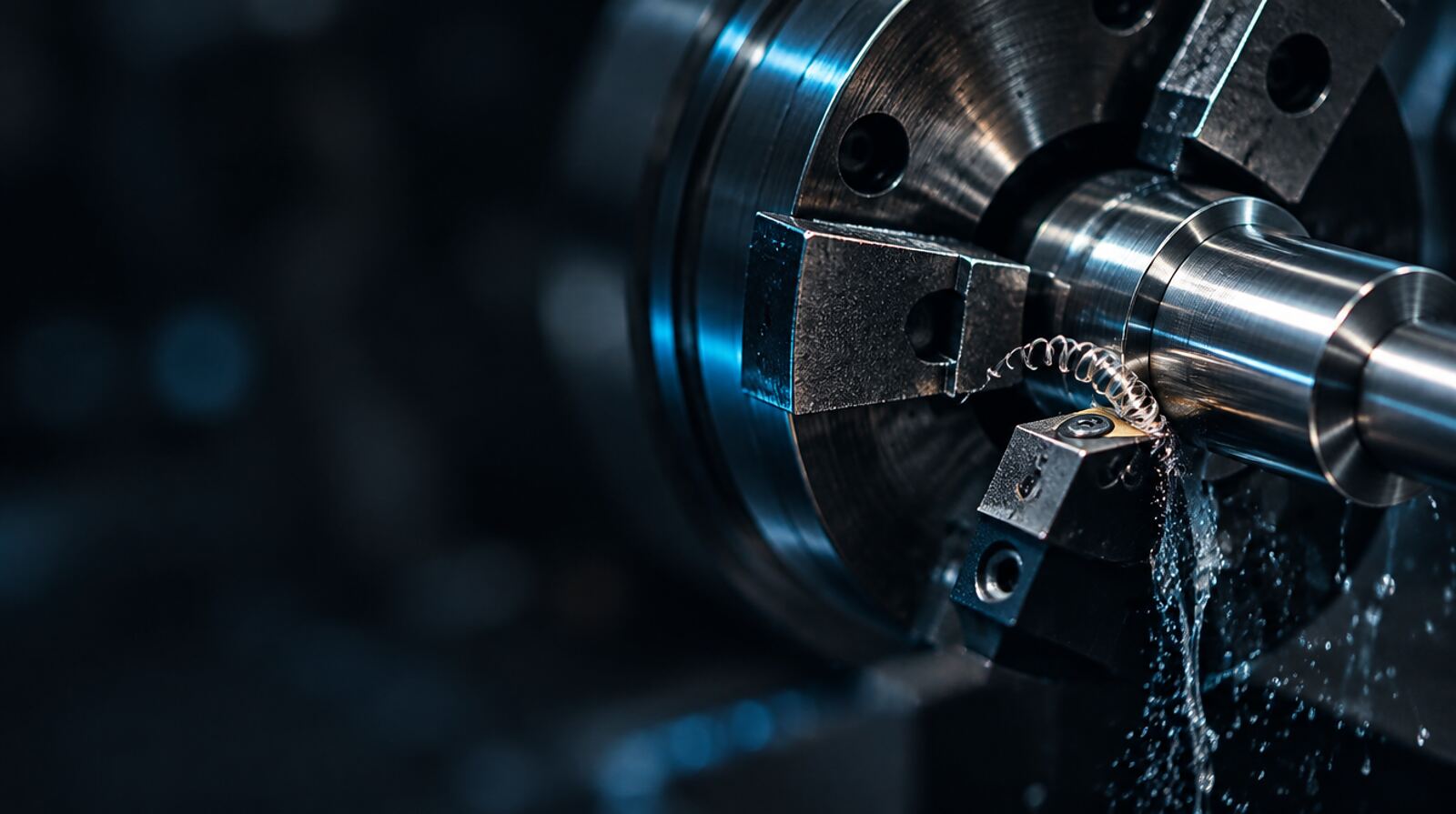
Turned parts made to toolroom standards
Round parts look simple, but most turned components do a precise job: a bush that must slide without play, a shaft that must run true in its bearings, a blow pin that must seal on every cycle. Mignon Tools & Dies has made precision parts in Chloorkop, Kempton Park since 1980, and we turn every component with the same care we put into our own moulds and dies.
Our CNC lathes produce detailed custom parts from a single replacement to repeat production batches. Because turning sits alongside CNC milling, universal grinding, spark eroding and laser engraving in one workshop, turned parts that need flats, cross-holes, ground diameters or engraved markings are completed without leaving our hands.
What we turn
- Bushings and sleeves — plain and flanged bushes, wear sleeves and turned stainless steel bushings with controlled bore and outside diameters.
- Pin and sleeve sets — matched pairs turned to a defined running or sliding fit.
- Nozzles and bushes — including nozzles with fine pinhole tips for moulding applications.
- Blow pins — turned to precise sealing diameters, with the size laser engraved on the pin for quick identification.
- Cutting rings — turned rings for trimming and cutting applications, finished by grinding where required.
- Shafts, pins and spacers — stepped shafts, dowels, guide pins and spacers for machinery and tooling.
Turning for moulds and tooling
A large share of our turning goes into moulds. Blow pins, nozzles, sprue bushes, ejector sleeves and core pins all need tight concentricity between the bore, the outside diameter and the sealing face. The best way to achieve that is to turn those features in one clamping, so they share the same axis. We plan programs with this in mind and, where a part must be re-chucked, we use soft jaws or collets to hold run-out to a minimum. If you run blow moulding equipment, see also our blow mould repair service.
Turning, then grinding, for tight fits
A CNC lathe can hold close tolerances, but bearing seats, hardened pins and sliding fits often need the next level of size control and finish. For these parts we turn with a small grinding allowance on the critical diameters, have the part hardened where specified, and then finish-grind on our universal grinder. This also corrects the distortion that heat treatment introduces.
Material and design tips for turned parts
- Choose the right steel — EN8 for general shafts, EN19 for moderately stressed parts, EN24 for high strength. EN1A free-cutting steel is economical for lightly loaded parts.
- Stainless grades — 303 machines far better than 304 where its slightly lower corrosion resistance is acceptable. 316 is the choice for food and marine environments.
- Add thread reliefs and undercuts — a relief at the end of a thread or shoulder makes the part easier to turn and stronger in service.
- Specify concentricity only where it matters — a run-out tolerance between a bore and outside diameter is useful; applying it to every feature adds cost.
- Mind thin walls — long, thin-walled sleeves distort when clamped. Tell us the function and we will suggest a practical wall thickness.
Why choose Mignon for CNC turning
- Toolmaker accuracy — over 46 years of turning mould and die components.
- Turn, mill, grind and engrave in-house — complete parts from one supplier.
- Mould component experience — blow pins, nozzles and sleeves that fit first time.
- Breakdown response — same-day assessment for stopped lines.
- Central location — Chloorkop, Kempton Park, minutes from OR Tambo and easy to reach from Johannesburg, Pretoria and the East Rand.