Chloorkop, Kempton Park · Gauteng Mon–Thu 05:30–15:30 · Fri 05:30–12:00
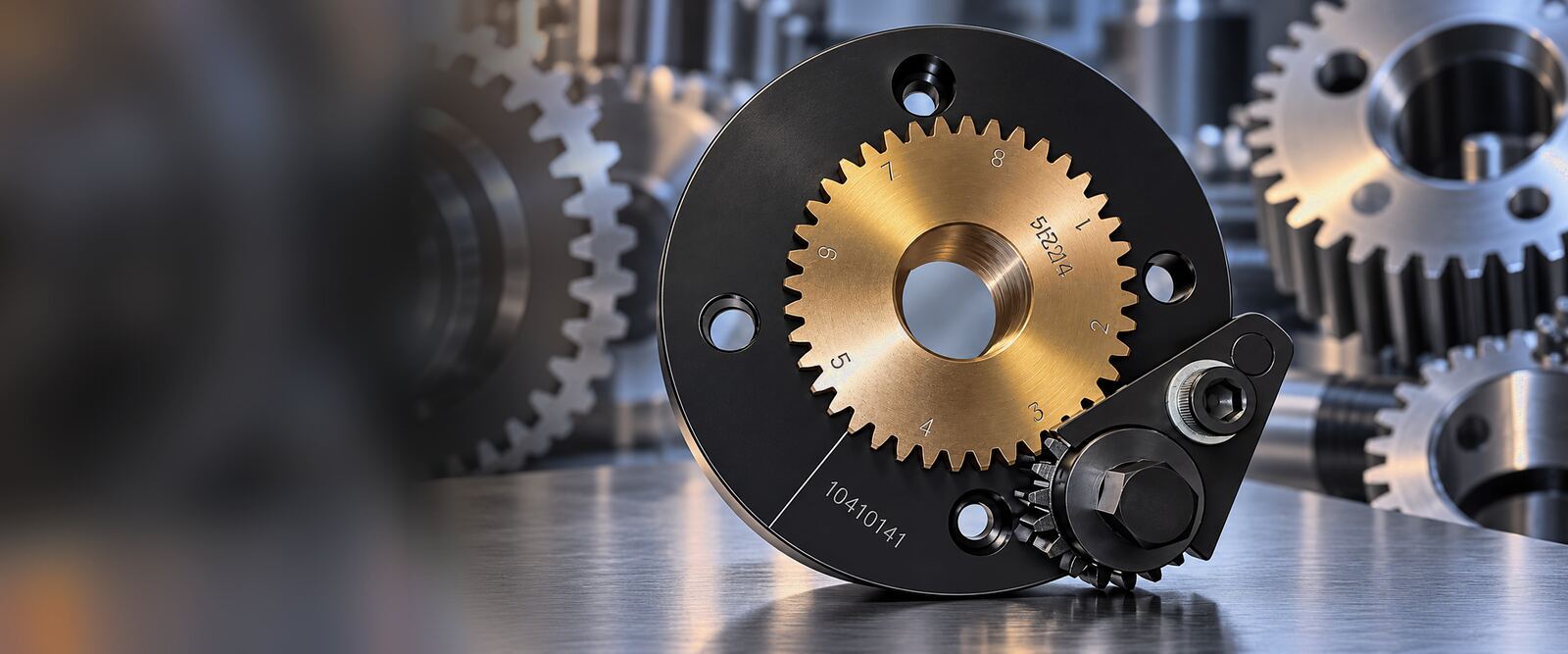
Laser-marked bronze gear and machined drive plate assembly with production gears behind

Precision Machining

Production CNC Machining in Gauteng

Production-ready components in small batches or full serialised runs — CNC milled and turned, checked and marked in one workshop.

Manufacturing since
1980
CNC machines
5
Batch quantities
1–2,000
Quote response target
24 h

Overview

Production Manufacturing at Mignon Tools & Dies

Mignon Tools & Dies manufactures production components on CNC milling and turning machines at its workshop in Chloorkop, Kempton Park. We supply single parts and small batches quickly and cost-effectively, and run larger serialised orders with proven programs, dedicated fixtures and internal inspection controls so every part matches the first.

Capabilities

What we can do for you

Every job is handled by experienced toolmakers, using the same equipment and standards we apply to our own moulds and dies.

Serialised production runs

Full-scale production of consistent parts, backed by documented programs, set-up sheets and inspection records.

Production milling

Prismatic parts, plates and housings milled in batches with repeatable fixturing and proven toolpaths.

Production turning

Pins, bushes, spacers, sleeves and threaded parts turned to drawing in volume.

Internal quality controls

First-off approval, in-process checks at set intervals and final inspection of critical dimensions.

Serial numbers & traceability

Part numbers, batch codes, logos and QR codes laser engraved on flat or cylindrical metal parts.

Scheduled deliveries

Repeat orders and call-off batches planned around your production schedule.

Specifications

Capability & materials

Send us your drawing even if your part sits outside these figures — we’ll tell you honestly what is achievable.

Production machining capability
CNC milling machinesThree 3-axis machining centres: DN Solutions, Hurco and DMG
CNC turning machinesTwo 2-axis CNC lathes, max. Ø200 mm
Bar feedingBar feeder and conveyor on one lathe for larger runs
Standard tolerance±0.02 mm
Batch size1 to 2
MarkingLaser engraving of serials and QR codes

Engineering steels

  • EN1A free-cutting
  • EN8 / 080M40
  • EN19 / 709M40
  • EN24 / 817M40
  • Mild steel 300WA

Stainless steels

  • 303 free-machining
  • 304
  • 316 / 316L
  • 431

Tool steels

  • D2 / 1.2379
  • H13 / 1.2344
  • P20 / 1.2311

Non-ferrous

  • Aluminium 6082-T6
  • Brass
  • Phosphor bronze
  • Copper

Engineering plastics

  • Acetal (POM)
  • Nylon 6
  • UHMW-PE
  • PTFE

How it works

From enquiry to finished part

A clear, engineering-led process so you always know where your job stands.

  1. Quote & design review

    We review the drawing, quantity and annual usage, and suggest changes that reduce cycle time or set-ups.

  2. Programming & fixturing

    CNC programs are written and proven, and fixtures are made so parts locate the same way every time.

  3. First-off approval

    The first part is fully measured against the drawing, and can be sent to you for sign-off before the run.

  4. Production run

    Parts are machined with in-process checks at set intervals and tool offsets adjusted for wear.

  5. Inspection, marking & delivery

    Final checks, laser engraving if required, then packing and delivery or call-off to your schedule.

From one-off to full production

Mignon Tools & Dies has been machining precision parts in Chloorkop, Kempton Park since 1980. Today the workshop specialises in high-production CNC milling and turning, alongside the toolmaking work the business was built on. That combination matters for production customers: the same people who build moulds and dies to fine tolerances set up and control your production runs.

We work at two scales. Single parts and small batches of production-ready components are made quickly and cost-effectively, which suits development parts, low-volume products and spares. For larger serialised runs we have the technology and internal controls to produce consistent parts at full scale.

Small batches, made efficiently

Small batches are where many larger machine shops lose interest, because set-up time is a large share of the cost. As a toolroom we are used to short runs and quick changeovers. We keep set-ups simple, reuse standard fixtures where we can, and write programs that are easy to prove. The result is a fair price on quantities of tens rather than thousands, and a program on file if you reorder.

Serialised runs with internal controls

For larger orders, consistency is the whole job. Our approach is straightforward and documented:

  • Proven programs — each CNC program is simulated and proven before production starts.
  • Dedicated fixtures — parts locate on the same datums every time, which removes set-up variation.
  • First-off approval — the first part is measured against every dimension on the drawing before the run continues.
  • In-process checks — critical dimensions are checked at set intervals, and tool offsets are adjusted as cutters wear.
  • Final inspection — critical features are measured before packing.
  • Traceability — batches can be laser engraved with serials or QR codes in-house.

Designing parts for lower production cost

Small drawing changes can save a lot over a production run. Before quoting we look for:

  • Tolerances only where needed — a ±0.01 mm tolerance on a non-functional face adds inspection time to every part.
  • Standard radii and hole sizes — internal corners sized to standard cutters and holes to standard drills avoid special tooling.
  • Fewer set-ups — features that can be machined from one side, or in one clamping, cut cycle time.
  • Free-machining materials — EN1A instead of mild steel, or 303 instead of 304 stainless, where the application allows, machines faster and gives a better finish.
  • Stock sizes — designing around standard bar and plate sizes reduces material waste.

Supporting processes in the same workshop

Production parts often need a secondary operation. Surface and universal grinding, spark eroding and laser engraving are all done in-house, so a part that is turned, ground and marked does not need three suppliers. See also CNC milling and CNC turning for the detail on each process.

Why manufacturers choose Mignon for production

  • Toolroom discipline — more than 46 years of precision work applied to every run.
  • Small batches and large runs — one supplier as your volumes grow.
  • Consistent parts — proven programs, fixtures and in-process checks.
  • In-house finishing and marking — grinding, spark eroding and laser engraving under one roof.
  • Central location — Chloorkop, Kempton Park, near OR Tambo, with easy delivery across Gauteng and courier to the rest of South Africa.

FAQ

Production Manufacturing questions, answered

Can’t find what you’re looking for? Call or WhatsApp us — you’ll speak directly to a toolmaker.

What is production CNC machining?

It is the repeated manufacture of the same component on CNC milling or turning machines, using a proven program and fixture so every part is consistent. It suits anything from a small batch to a serialised run of thousands.

What batch sizes do you handle?

We make single parts and small batches as well as larger serialised runs. Typical production quantities are 1 to 2,000 parts; tell us your annual usage and we will suggest the most economical batch size.

How do you keep parts consistent across a run?

Each job uses a proven CNC program and fixture. The first part is fully measured and approved, critical dimensions are checked at set intervals during the run, and tool offsets are adjusted as cutters wear.

Can you mark parts with serial numbers or batch codes?

Yes. We laser engrave part numbers, serials, batch codes, logos and QR codes in-house, on flat or cylindrical metal surfaces.

Is it cheaper per part to order larger batches?

Usually, yes. Programming, fixture making and set-up are once-off costs that are spread across the batch. For repeat parts we can also hold your program and fixture so later orders start faster.

Do you supply inspection records?

We measure and record critical dimensions on first-off and in-process checks. whether formal inspection reports or certificates of conformance are supplied.

Are you ISO 9001 certified?

certification status — do not claim unless certified. We apply internal controls on every production run: first-off approval, in-process checks and final inspection of critical features.

Free, no-obligation quote

Get a quote for production manufacturing

Tell us what you need. Attach a drawing, 3D model or photo if you have one — it helps us quote accurately.

Add specification (optional — helps us quote faster)
Approximate size (mm)
Drawings, models or photos
    We reply within one working day.

    Related services

    Often combined with

    WhatsApp us