Chloorkop, Kempton Park · Gauteng Mon–Thu 05:30–15:30 · Fri 05:30–12:00
Stainless steel cutting blades laser engraved with C3 MIGNON TOOLS AND DIES

Design, Repair & Marking

Laser Engraving and Part Marking in Kempton Park

In-house laser engraving of serial numbers, part numbers, logos and QR codes on metal parts — flat or cylindrical, single parts or batches.

Laser marking
In-house
Marking area
100 × 100 mm
Surfaces marked
Flat & round
Quote response target
24 h

Overview

Laser Engraving & Part Marking at Mignon Tools & Dies

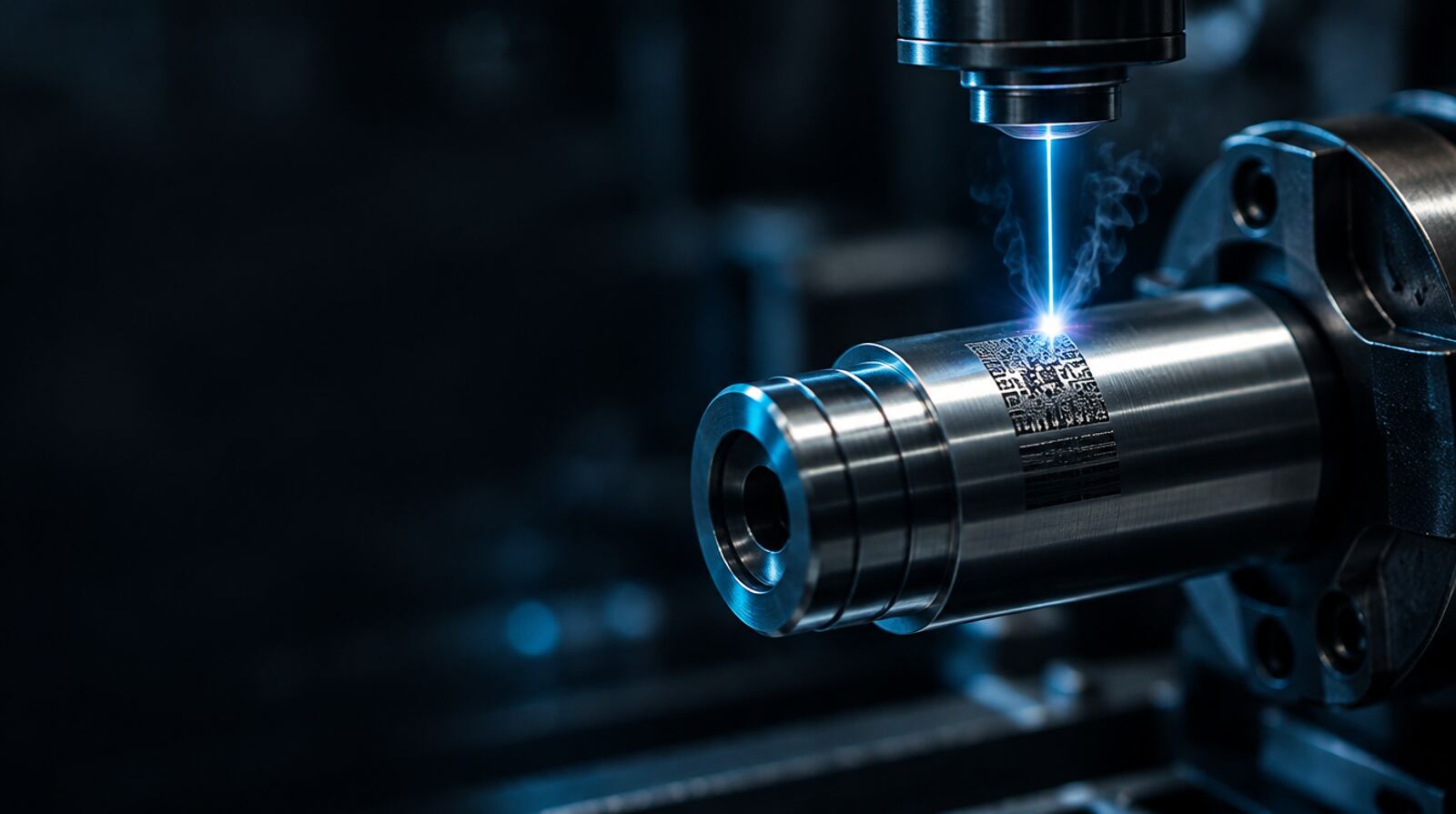
Mignon Tools & Dies does laser engraving in-house at its toolroom in Chloorkop, Kempton Park. We mark serial numbers, part numbers, custom logos and QR codes on any metal surface, flat or cylindrical, so parts and tooling can be traced and re-ordered. This includes components we machine and parts you supply.

Capabilities

What we can do for you

Every job is handled by experienced toolmakers, using the same equipment and standards we apply to our own moulds and dies.

Serial & part numbers

Sequential serials, part and batch numbers marked permanently for traceability and re-ordering.

QR & data matrix codes

Machine-readable codes that link a part to its drawing, batch or inspection record.

Logos & branding

Your company logo and name engraved on tools, blades, components and equipment.

Cylindrical marking

Shafts, pins, bushes and round parts marked around or along the diameter.

Batch marking

Repeat parts marked in fixtures for consistent position and quality across a batch.

Tool & mould identification

Blades, blow pins, inserts and mould parts marked with numbers, sizes and dates.

Specifications

Capability & materials

Send us your drawing even if your part sits outside these figures — we’ll tell you honestly what is achievable.

Laser engraving capability
Laser typeFibre laser (Maxlaser)
Marking area100 × 100 mm per field
Mark typesEngraving / annealing / surface marking
CodesQR / data matrix / barcodes / sequential serials
MaterialsSteels / stainless / aluminium / brass / copper

Steels

  • Tool steels
  • EN-series steels
  • Hardened components

Stainless steels

  • 304
  • 316
  • 420
  • 431

Non-ferrous

  • Aluminium
  • Anodised aluminium
  • Brass
  • Copper
  • Beryllium copper
  • [CONFIRM∶ titanium?]

How it works

From enquiry to finished part

A clear, engineering-led process so you always know where your job stands.

  1. Artwork & data

    Send your logo, text, serial range or code content, plus the part drawing showing the mark position.

  2. Mark selection

    We recommend engraving, annealing or surface marking to suit the material and how the part is used.

  3. Fixturing

    Parts are located in a fixture or rotary device so every mark lands in the same place.

  4. Marking

    A trial mark is approved, then the batch is marked with serials incremented automatically.

  5. Verify

    Marks are checked for legibility, and codes are scanned before dispatch.

Permanent marking, done in-house

Laser engraving is done in-house at Mignon Tools & Dies. We mark serial numbers on parts, and custom logos and QR codes on any metal surface, flat or cylindrical. Because marking happens in the same workshop as machining, a part can be engraved as the last step before dispatch, without being sent to an outside marking supplier.

You can see examples on our own work. Stainless steel cutting blades are engraved "C3 MIGNON TOOLS AND DIES", and blow pins carry the MIGNON name, a part number and the stem diameter so they can be identified and re-ordered.

Why mark parts: traceability and re-ordering

A permanent mark links a physical part to its records. For manufacturers in mining, rail, medical and food processing this matters because:

  • Traceability. A serial or batch number connects the part to its material certificate, heat treatment and inspection.
  • Correct fitting. Part numbers and sizes stop similar-looking components being mixed up.
  • Faster re-ordering. Maintenance teams read the number off the part instead of measuring it.
  • Warranty and ownership. Logos and serials identify the maker and owner of tools and equipment.

Marking types: engraving, annealing and surface marking

  • Engraving removes material to leave a recessed mark. It survives wear, blasting and coating, so it suits tooling, mining and rail components and parts that are painted afterwards.
  • Annealing heats the surface of steel or stainless steel to produce a dark oxide colour with no material removed. The surface stays smooth, which suits food-processing and medical parts where a recess could trap contamination.
  • Surface marking or ablation removes a coating or anodised layer to show the base metal. It is fast and high-contrast on anodised aluminium.

We recommend a mark type based on the material, how the part will be used and what comes after marking, such as heat treatment, plating or cleaning.

QR codes, data matrix and serial numbers

Two-dimensional codes hold far more information than a printed number in a small area. A data matrix code a few millimetres square can hold a part number, serial and date, and stays readable even when partly damaged. For reliable scanning, we keep codes on flat, clean areas where possible, choose a size suited to the scanner and test-scan marks before dispatch. Sequential serial numbers increment automatically, from a starting number or from a list you supply.

Flat, cylindrical and batch marking

Flat parts are marked in fixtures that place every mark in the same position. Shafts, pins, bushes and other round parts can be marked along or around the diameter. Our fibre laser marks a 100 × 100 mm field. For batch work, we mark a trial part for your approval, then run the batch with consistent depth, contrast and position.

Laser engraving pairs naturally with production machining and CNC milling: parts are machined, deburred and marked in one order. Send your artwork or serial range, or call or WhatsApp 060 788 1285.

FAQ

Laser Engraving & Part Marking questions, answered

Can’t find what you’re looking for? Call or WhatsApp us — you’ll speak directly to a toolmaker.

What can you laser engrave?

Serial numbers, part numbers, custom logos, text, QR codes and data matrix codes on any metal surface, flat or cylindrical.

Can you engrave parts that you did not machine?

Yes. We mark customer-supplied parts as well as components we make. Send a drawing or sample showing where the mark should go.

What is the difference between laser engraving, annealing and etching?

Engraving removes material to give a recessed mark that survives wear. Annealing changes the colour of steel and stainless without removing material, leaving a smooth surface. Surface marking or ablation removes a coating such as anodising.

Which laser marking is best for stainless steel?

For food and medical parts, annealing is often preferred because it leaves no recess to trap dirt. For parts that will be worn, blasted or coated, deeper engraving lasts longer.

Can you mark sequential serial numbers?

Yes. Serials increment automatically, from a starting number or from your CSV list.

Which laser do you use and how big can the mark be?

We mark with a fibre laser over a 100 × 100 mm field. Large parts can be marked in sections. Contact us with your part size.

How do I get a quote?

Send your artwork, text or serial range with the part drawing or a photo, or call or WhatsApp 060 788 1285. We are in Chloorkop, Kempton Park.

Free, no-obligation quote

Get a quote for laser engraving & part marking

Tell us what you need. Attach a drawing, 3D model or photo if you have one — it helps us quote accurately.

Add specification (optional — helps us quote faster)
Approximate size (mm)
Drawings, models or photos
    We reply within one working day.

    Related services

    Often combined with

    WhatsApp us