Chloorkop, Kempton Park · Gauteng Mon–Thu 05:30–15:30 · Fri 05:30–12:00
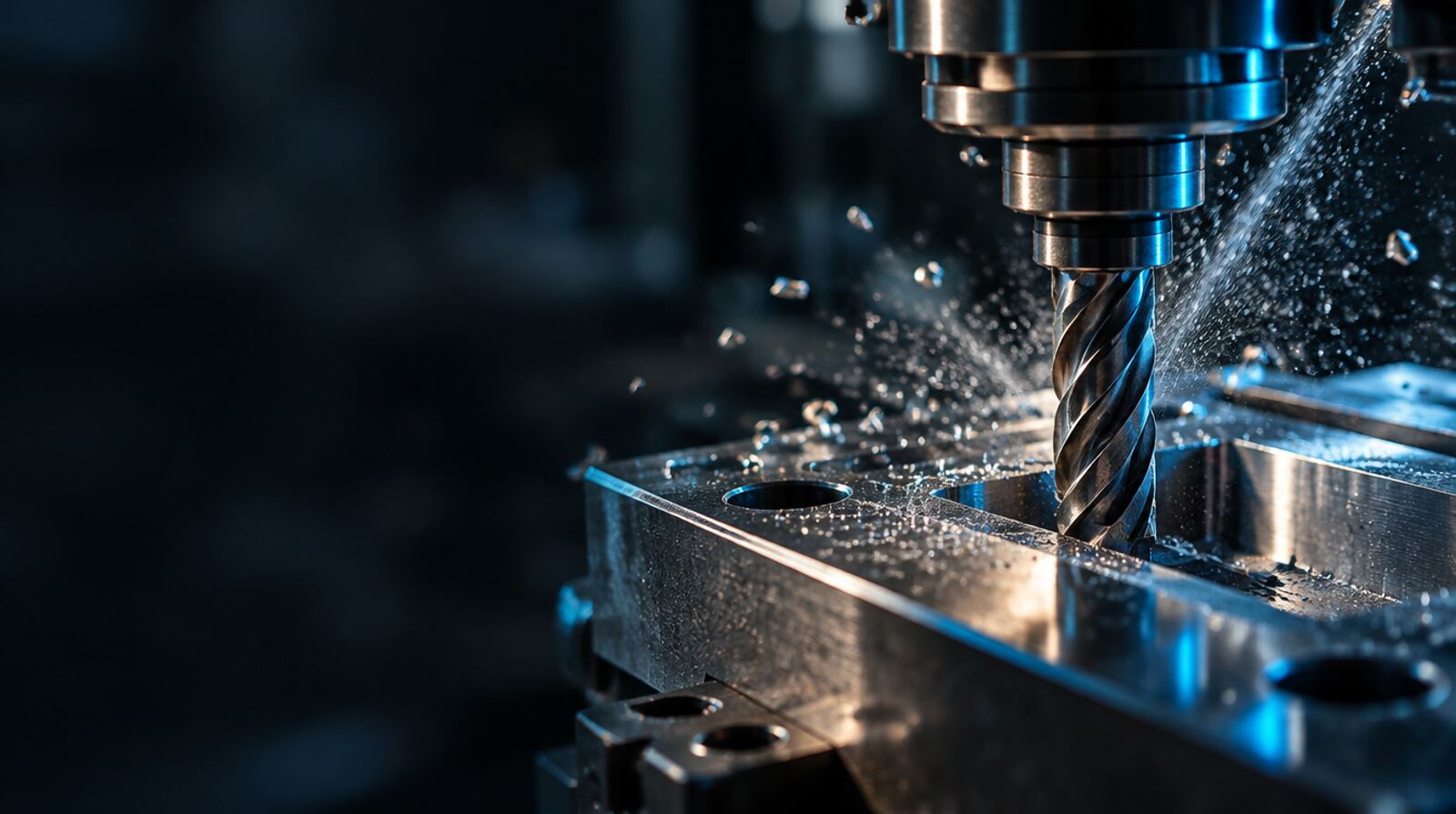
CNC milling cutter machining a hardened steel mould plate under blue workshop light

Precision Machining

CNC Milling Services in Kempton Park, Gauteng

Prismatic parts, mould plates and production components milled to drawing — from a single prototype to repeat batches.

Toolmaking since
1980
Standard tolerance
±0.01 mm
Batch quantities
1–2,000
Quote response target
24 h

Overview

CNC Milling at Mignon Tools & Dies

Mignon Tools & Dies provides precision CNC milling from its toolroom in Chloorkop, Kempton Park. We mill one-off parts, mould and die components and repeat production batches in tool steels, engineering steels, stainless steel, aluminium, brass, bronze and engineering plastics — machined to your drawing, sample or 3D model and inspected before dispatch.

Capabilities

What we can do for you

Every job is handled by experienced toolmakers, using the same equipment and standards we apply to our own moulds and dies.

Mould & die components

Cavity and core plates, inserts, ejector plates, bolsters and die sets — milled with the flatness, squareness and fit a toolroom demands.

3D contours & pockets

Complex 3D surfaces, deep pockets, ribs and thin walls programmed from your CAD model with CAM-generated, verified toolpaths.

Production batches

Repeat components produced with proven programs, dedicated fixturing and in-process checks so part 500 matches part 1.

Jigs, fixtures & gauges

Workholding fixtures, assembly jigs and go/no-go checking gauges for your own production line.

Reverse engineering

No drawing? We measure the worn or broken part, model it in 3D CAD and mill a replacement — often better than the original.

Marking & finishing

In-house laser engraving of part numbers, serials and QR codes, plus deburring, hardening and surface treatment through trusted partners.

Specifications

Capability & materials

Send us your drawing even if your part sits outside these figures — we’ll tell you honestly what is achievable.

CNC milling capability
Machine typeDN Solutions, Hurco and DMG machining centres
Axes3-axis
Max. travel (X × Y)1000 × 600 mm (DMG); 800 × 500 mm (DN Solutions); 650 × 540 mm (Hurco)
Standard tolerance±0.02 mm
Batch sizeOne-off to repeat production
InspectionHeight gauges, granite surface plate, micrometers, vernier and digital calipers, bore gauges, dial indicators, slip gauges, and thread and pin gauges

Tool & die steels

  • D2 / 1.2379
  • H13 / 1.2344
  • P20 / 1.2311
  • 2316 stainless mould steel
  • O1 / 1.2510

Engineering steels

  • EN8 / 080M40
  • EN9
  • EN19 / 709M40
  • EN24 / 817M40
  • Mild steel 300WA
  • EN36 case-hardening

Stainless steels

  • 304
  • 316 / 316L
  • 303 free-machining
  • 431
  • 17-4PH

Non-ferrous

  • Aluminium 6082-T6
  • Aluminium 7075-T6
  • Brass
  • Phosphor bronze
  • Beryllium copper
  • Copper

Engineering plastics

  • Acetal (POM / Delrin)
  • Nylon 6
  • UHMW-PE
  • PEEK
  • PTFE

How it works

From enquiry to finished part

A clear, engineering-led process so you always know where your job stands.

  1. Enquiry & drawing review

    Send a drawing, 3D model, sample or photo. We check tolerances, material and quantities and flag anything that drives cost.

  2. Design-for-manufacture

    We suggest practical changes — radii, tolerances, material — that save time without compromising function.

  3. CAD / CAM programming

    Toolpaths are programmed and simulated before metal is cut, with fixturing planned for repeatability.

  4. Precision milling

    Parts are machined by experienced toolmakers, with first-off inspection before the batch runs.

  5. Inspection & dispatch

    Critical dimensions are measured and recorded, then parts are deburred, marked if required and delivered or collected.

Toolroom precision, applied to every milled part

CNC milling is at the heart of everything a toolmaker does. Mould plates must close without flash, die sets must align to the hundredth, and inserts must fit first time. Mignon Tools & Dies has been making precision tooling in Kempton Park since 1980, and the same discipline goes into every part we mill for customers — whether it is a single replacement bracket or a repeat batch of production components.

Because we build and maintain moulds and dies ourselves, we understand how milled parts are actually used. We look at your drawing the way an engineer will use the part: which faces locate, which bores run, which tolerances truly matter. That is how we keep cost under control without compromising function.

What we mill

  • Mould and die components — cavity and core plates, inserts, ejector and stripper plates, bolsters, die shoes and punch holders.
  • Machine and equipment parts — housings, brackets, mounting plates, manifolds, wear parts and adaptors for mining, food processing and packaging equipment.
  • Prototypes and development parts — proof-of-concept components milled from solid while your design is still evolving.
  • Production components — repeat batches with documented programs and dedicated fixtures for consistent results.
  • Fixtures and gauges — workholding, welding and assembly jigs, and go/no-go gauges for your own quality control.

From drawing, model or worn sample

The fastest route to an accurate quote is a 3D model with a dimensioned PDF drawing. But many of our customers come to us with nothing more than a worn or broken part. Our CAD team measures the sample, models it in 3D, corrects the wear and produces a drawing you keep for future spares. Read more about CAD design and reverse engineering.

Materials and finishing

We machine a wide range of tool steels, engineering steels, stainless steels, non-ferrous metals and engineering plastics. Material choice affects machinability, wear life and cost, so we are happy to recommend an alternative where it makes sense — for example EN19 instead of EN24 for a moderately stressed shaft, or pre-hardened P20 to avoid post-machining heat treatment on a mould plate.

Where parts need hardening, nitriding, anodising or plating, we manage the process with specialist partners and plan the machining sequence around it — roughing before heat treatment and finish-machining or grinding after, so critical dimensions are held.

Milling combined with our other processes

Many parts need more than one operation. Because CNC turning, surface and universal grinding, spark eroding (EDM), micro welding and laser engraving are all done in the same workshop, your part moves between processes without leaving our quality control — and without the delays of sending work between suppliers.

Why manufacturers choose Mignon for CNC milling

  • Toolmaker accuracy — four decades of building moulds and dies to fine tolerances.
  • One workshop, many processes — milling, turning, grinding, EDM, welding repair and engraving under one roof.
  • Engineering input — practical design-for-manufacture advice before we cut metal.
  • Breakdown response — urgent work for stopped production lines is assessed the same day.
  • Local and accessible — Chloorkop, Kempton Park, minutes from OR Tambo, with easy access from Johannesburg, Pretoria and the East Rand.

FAQ

CNC Milling questions, answered

Can’t find what you’re looking for? Call or WhatsApp us — you’ll speak directly to a toolmaker.

What tolerances can you hold on CNC milled parts?

Our standard milling tolerance is ±0.02 mm. Tighter tolerances on critical features are possible — mark them on your drawing and we'll confirm feasibility and cost before we quote.

Do you mill one-off parts or only production quantities?

Both. As a toolroom we regularly machine single prototypes, replacement parts and mould components, as well as repeat production batches for manufacturers.

What files should I send for a CNC milling quote?

A 3D model (STEP or IGES) plus a 2D PDF drawing with tolerances, material and finish is ideal. If you only have a sketch, a photo or the worn part itself, we can reverse-engineer it.

Which materials do you machine?

Tool steels (D2, H13, P20), engineering steels such as EN8, EN19 and EN24, stainless steels (304, 316, 431), aluminium, brass, bronze, beryllium copper and engineering plastics such as acetal and nylon. We can source material or machine customer-supplied stock.

Can you heat treat or coat milled parts?

Yes. We coordinate hardening, tempering, nitriding, anodising, black oxide and plating through specialist partners, and can machine before or after heat treatment as the design requires.

How quickly can you respond to a breakdown?

If a production line is stopped, call or WhatsApp us on 060 788 1285. We assess breakdown work the same day and prioritise it in the workshop.

Where are you located and do you deliver?

Our workshop is in Chloorkop, Kempton Park (Ekurhuleni), close to OR Tambo and between Johannesburg and Pretoria. Parts can be collected or delivered across Gauteng, and couriered nationally.

Free, no-obligation quote

Get a quote for cnc milling

Tell us what you need. Attach a drawing, 3D model or photo if you have one — it helps us quote accurately.

Add specification (optional — helps us quote faster)
Approximate size (mm)
Drawings, models or photos
    We reply within one working day.

    Related services

    Often combined with

    WhatsApp us